Quick Takeaways
- Chambers suit longer resting sessions
- Masks suit short or targeted use
- Hoods often work better for cooperative dogs
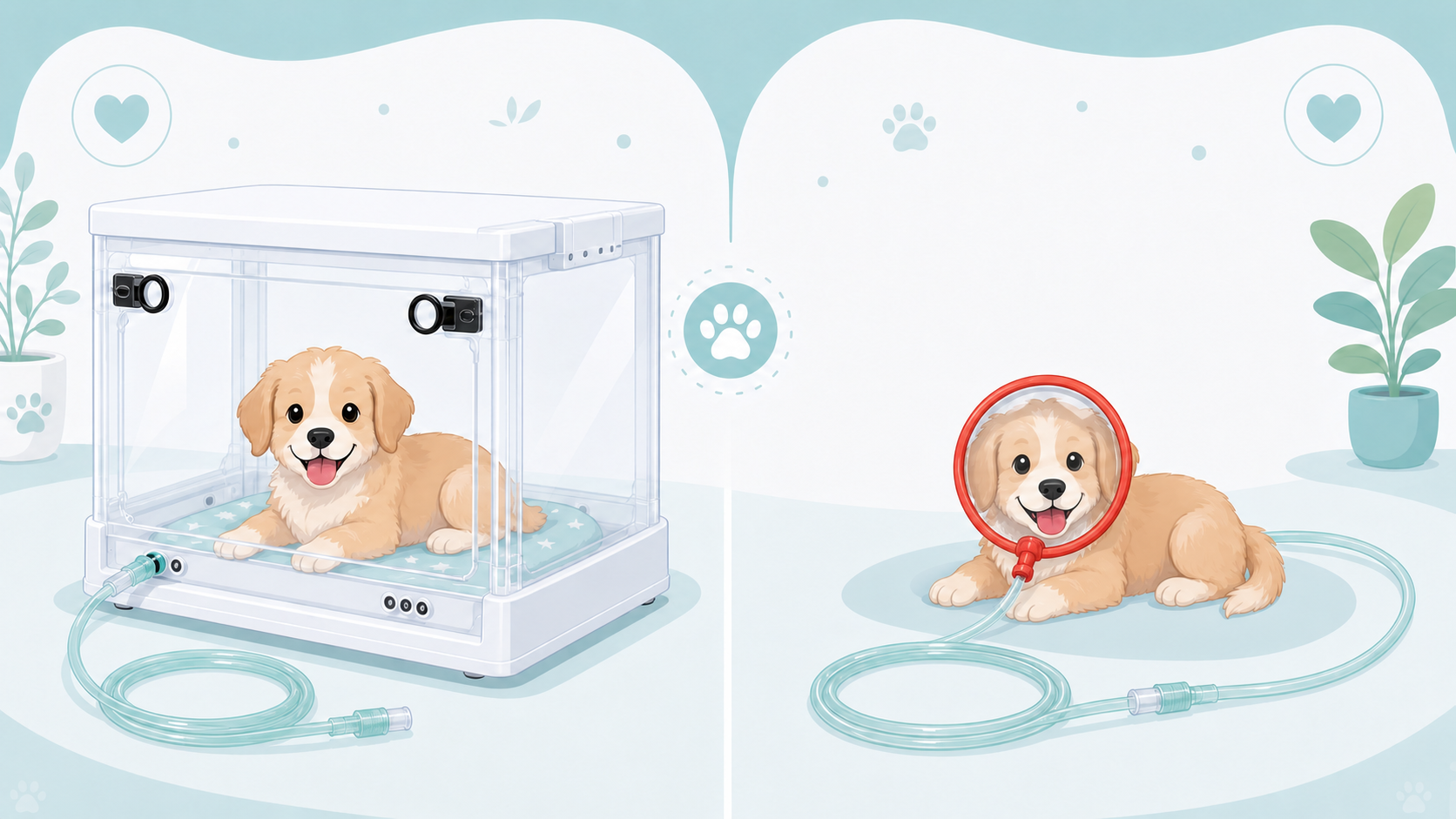
Chamber: stable and easy to observe
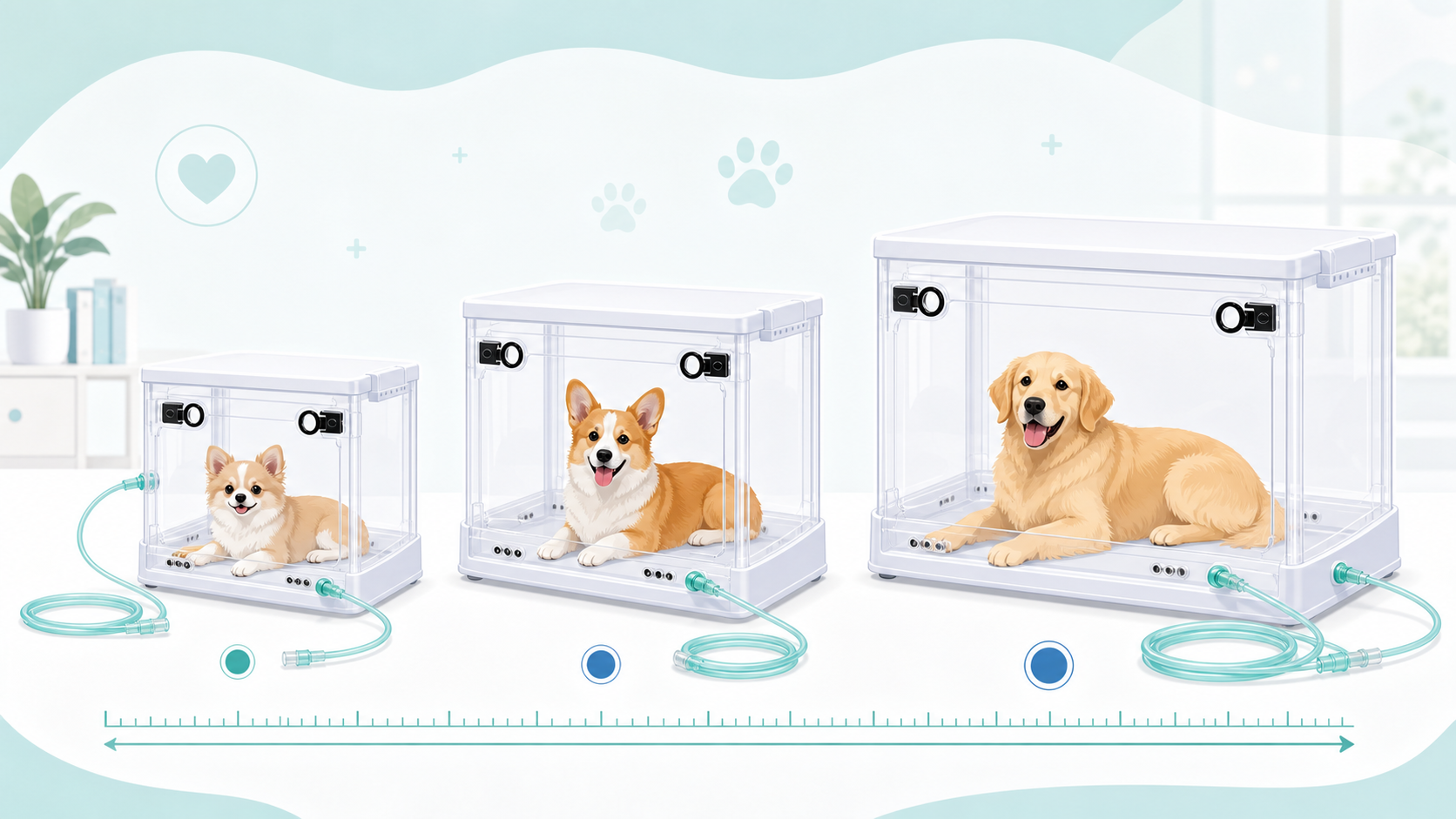
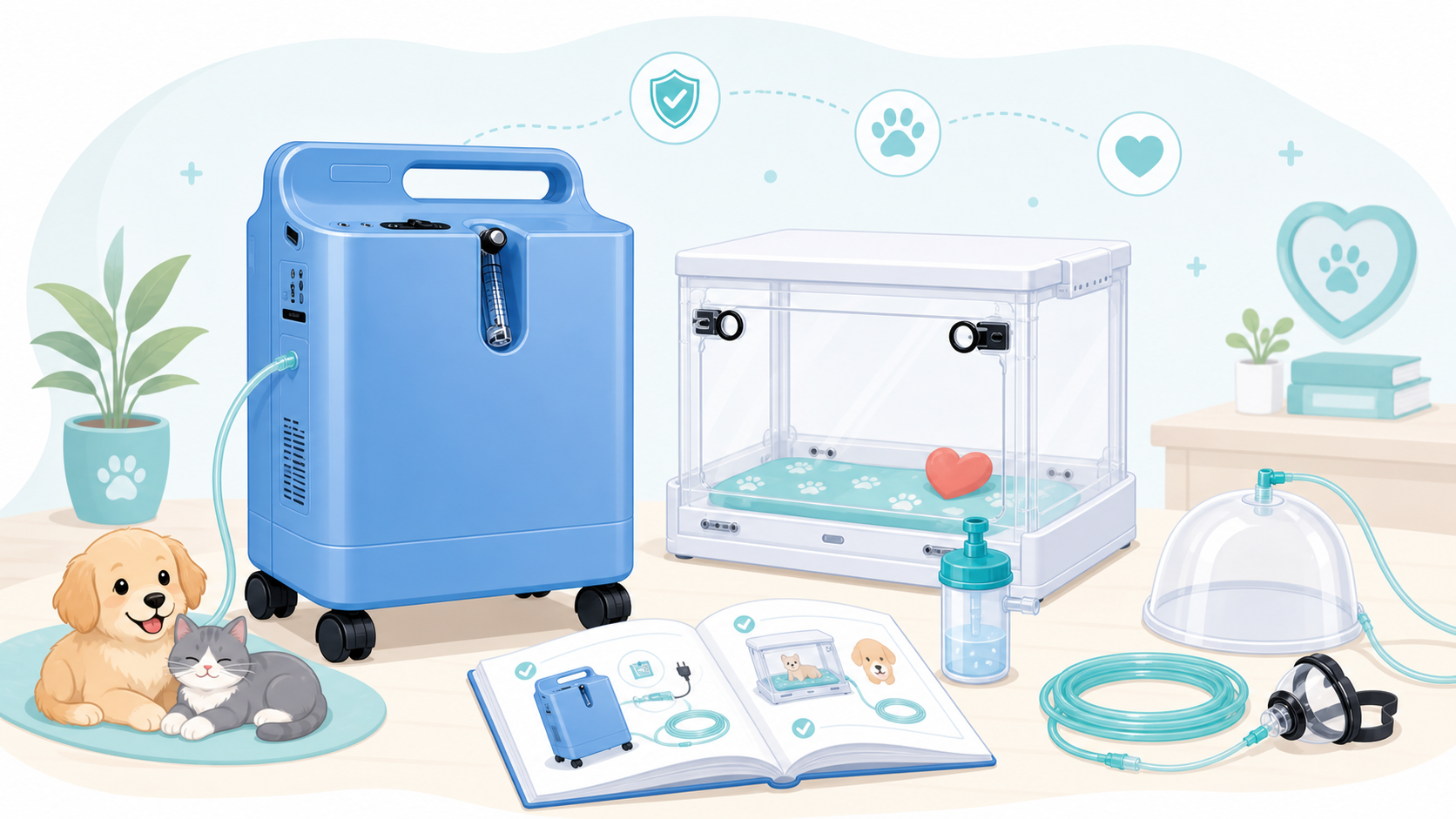
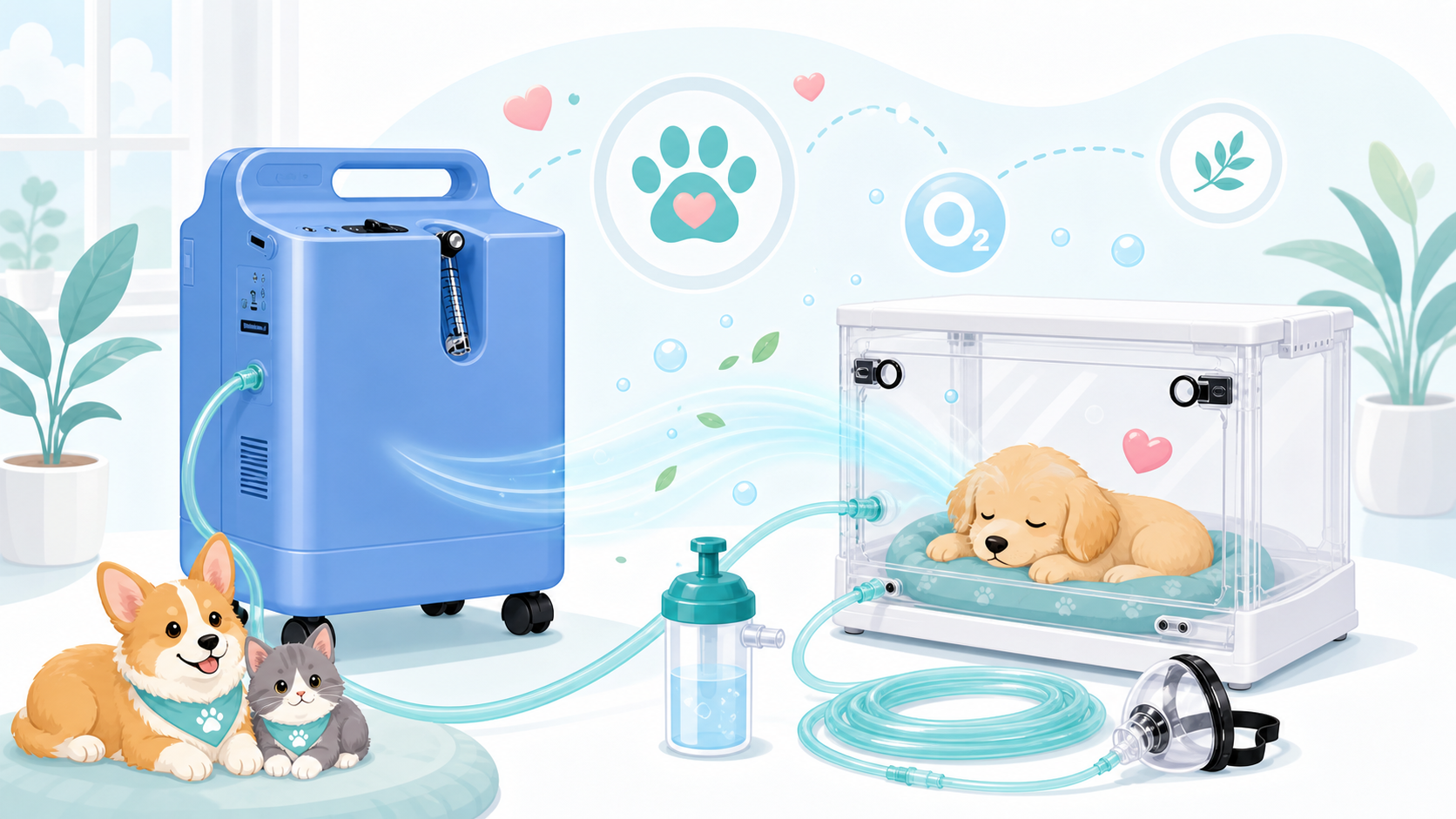
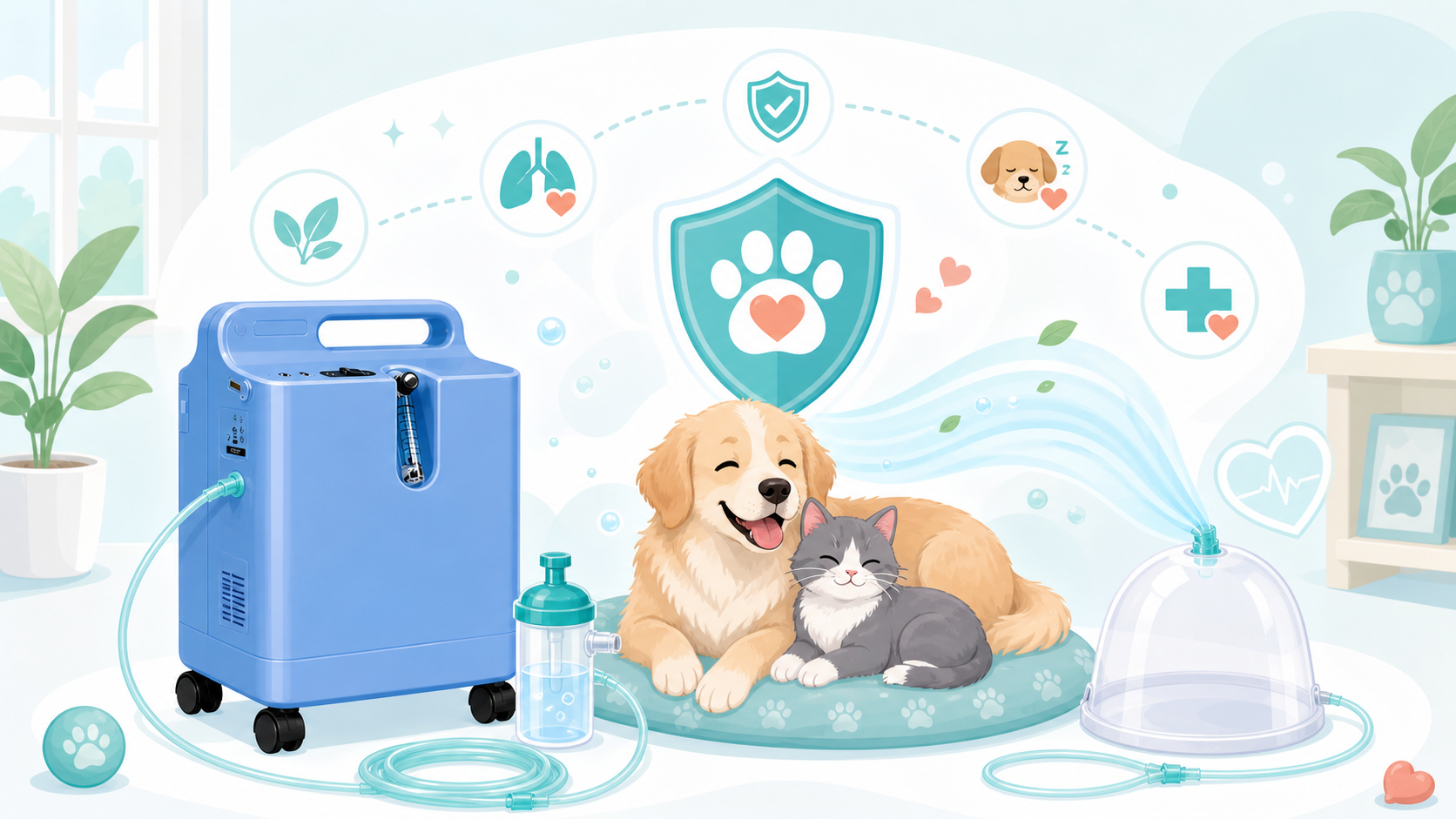
A chamber lets oxygen build in a semi-enclosed space. It is helpful for resting, post-op care and longer oxygen sessions. Transparent cases make breathing and alertness easier to monitor.
- Good for cats, small dogs and resting pets
- Does not need constant hand-holding
- Watch temperature and airflow inside
Mask: short and direct
A mask delivers oxygen near the nose and mouth, but usually needs the owner to hold it. Some pets resist it, so it is best for short sessions or vet-advised use.
- Useful for short oxygen support
- Do not leave unattended
- Avoid forcing it on a struggling pet
Hood: depends on temperament
Some dogs tolerate a hood better than a mask, while cats or anxious pets may not. Introduce it slowly and switch to a chamber if stress increases.
- Try short sessions first
- Check comfort around neck and edges
- Use a chamber if the pet becomes stressed
This guide is for owner education on home pet oxygen care. If your pet has breathing distress, gum colour changes, weakness or sudden worsening, contact a vet or emergency clinic first.
Need help choosing for your pet?
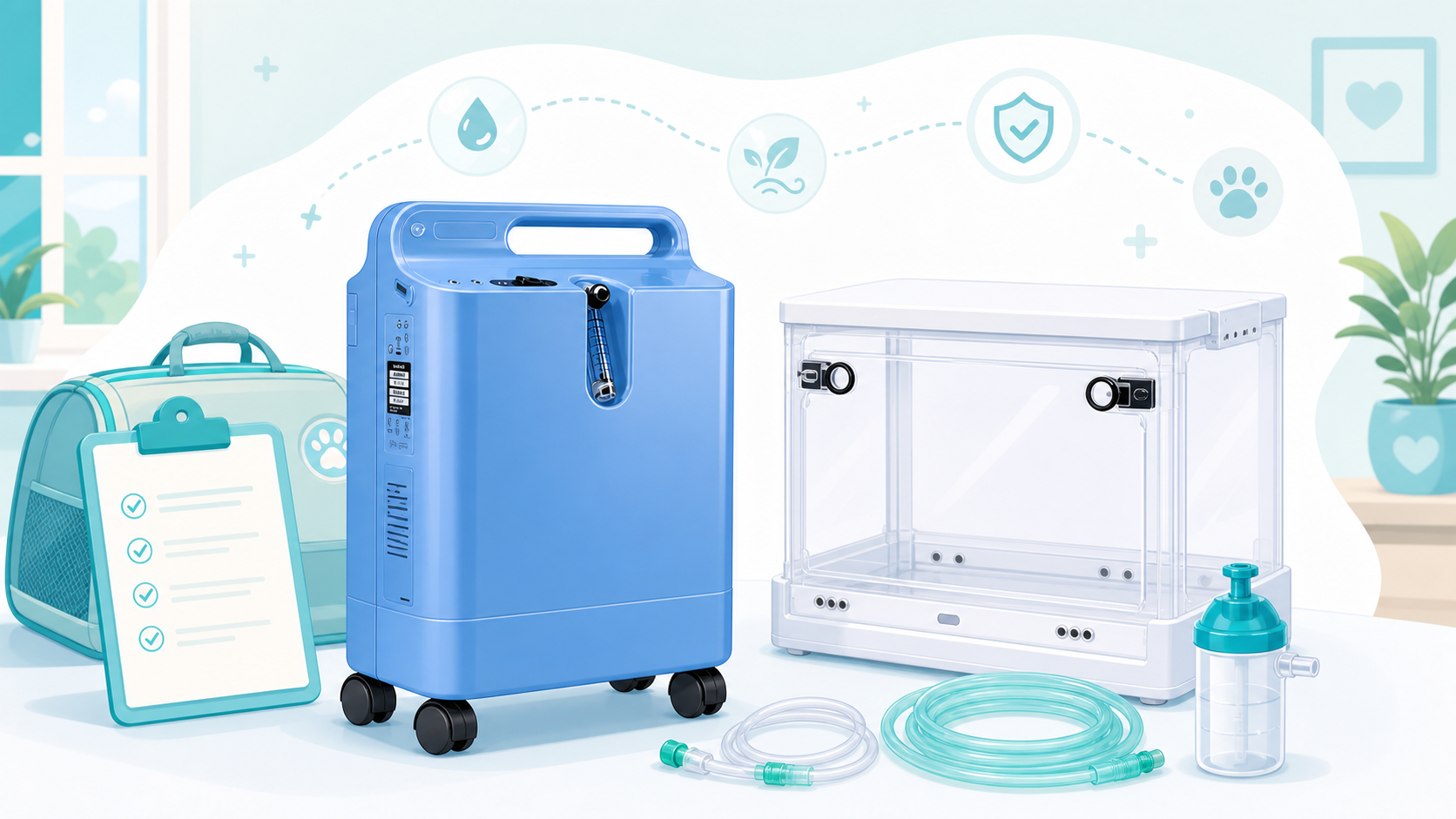
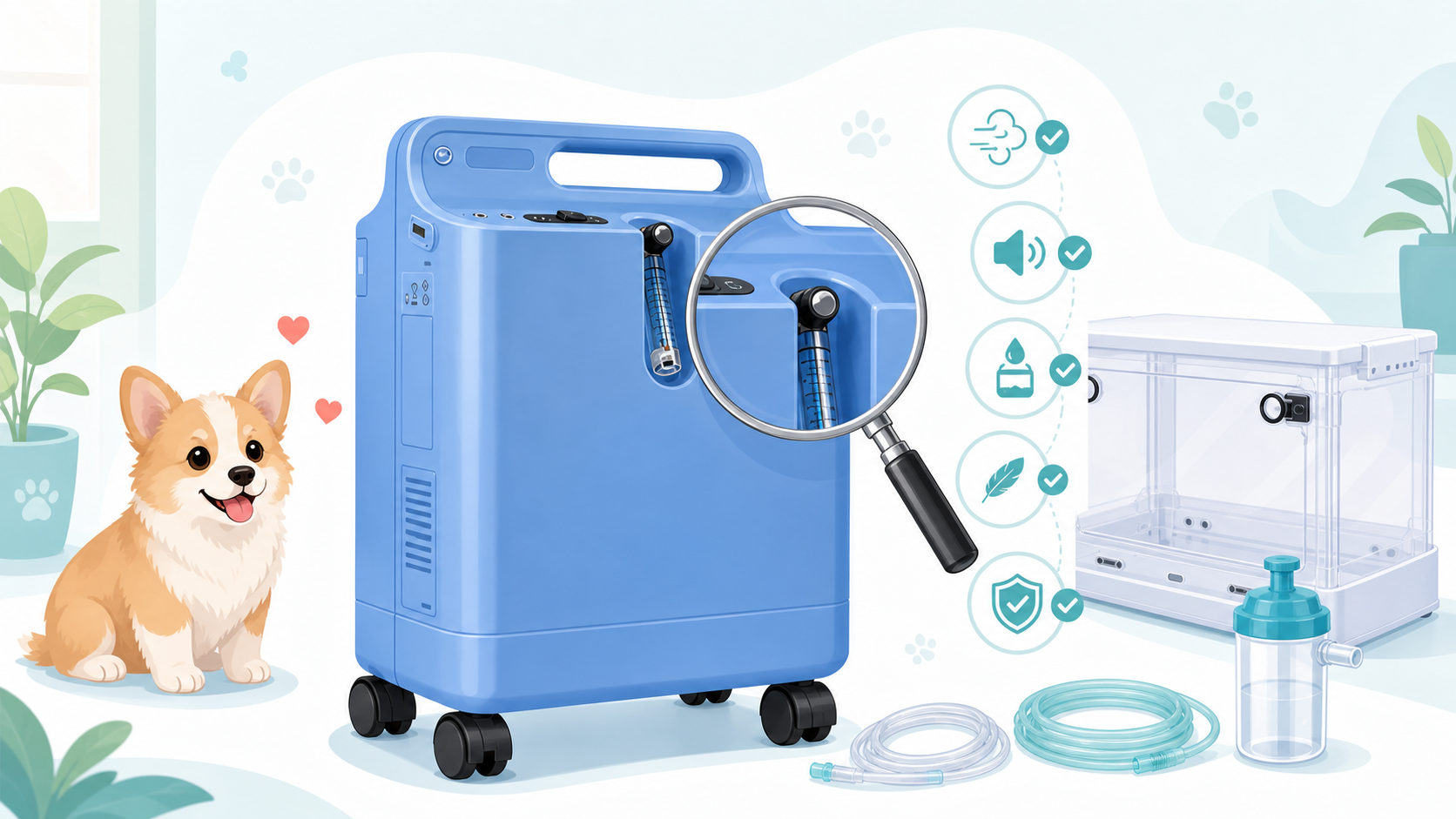
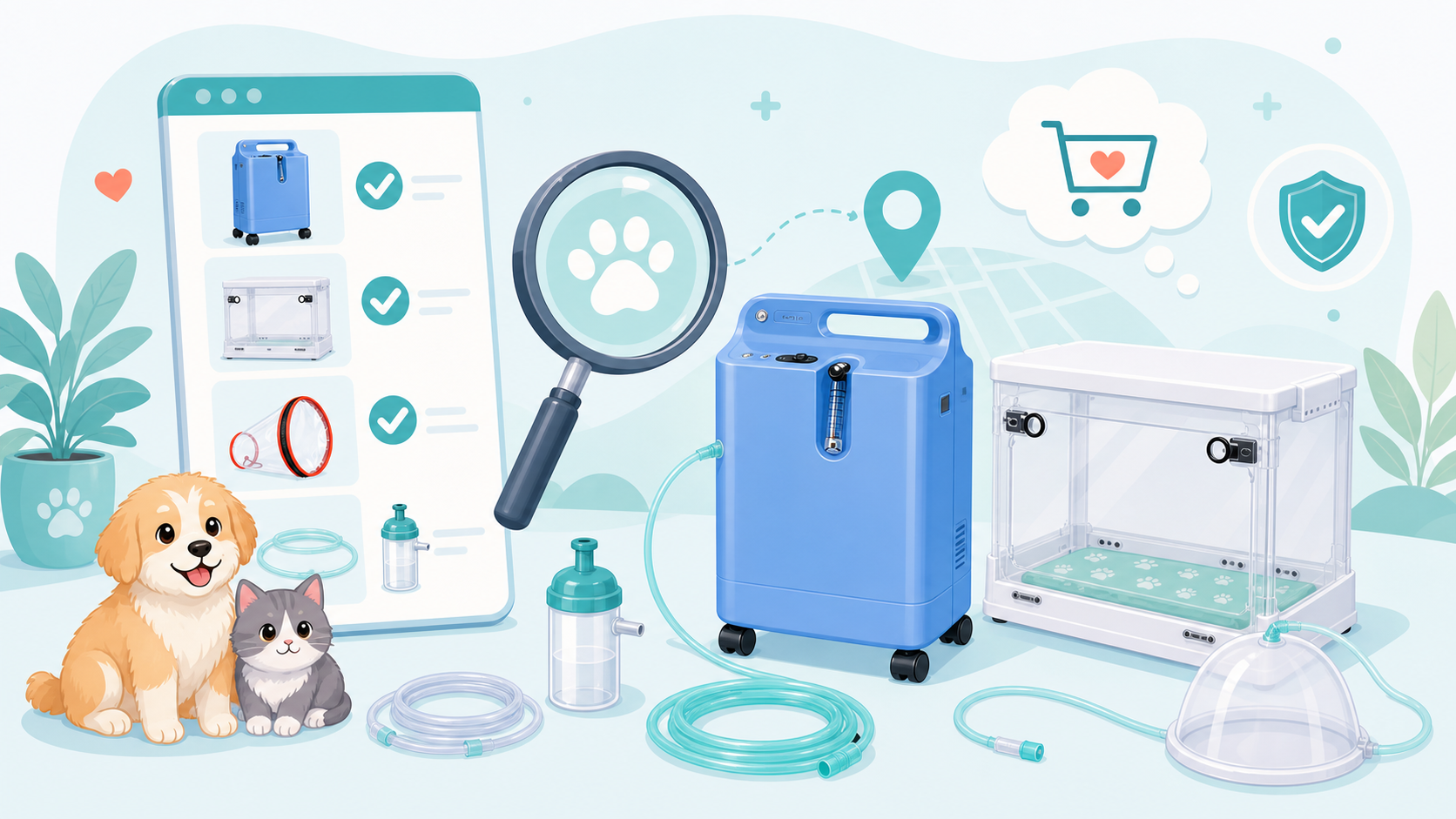
Send us your pet weight, photo, vet advice and required date. We can help pair EverFlo Q, Respicare or accessories.