Oxygen Machine for Cats
Cats often hide discomfort. Open-mouth breathing, fast breathing, lethargy, or appetite drop can be warning signs that need urgent attention.

Why Cats May Need Oxygen Support
Cats are masters at hiding illness, which is why breathing changes should be taken seriously. Asthma flare-ups, pleural effusion, pneumonia, cardiomyopathy-related distress, trauma, and post-operative weakness can all make oxygen exchange harder and increase the effort required just to breathe.
Oxygen support can help create a calmer recovery window when your veterinarian considers home care appropriate. For many cats, being in a familiar room with low noise, familiar smells, and minimal handling can reduce stress compared with repeated transport, while still allowing close observation of breathing rate, appetite, and energy.
The important distinction is that oxygen support is not the treatment plan by itself. It supports oxygenation while the real cause is being diagnosed and managed, so flow settings, session length, and escalation decisions should always follow veterinary guidance.
This content is educational and does not replace veterinary diagnosis. Follow your veterinarian for oxygen settings and duration.
Common Reasons Cats May Need Oxygen Support
Every pet is different, but oxygen support is usually considered when breathing effort rises, oxygenation drops, or recovery needs a calmer support window.
Asthma, pleural effusion, or pneumonia
Cats can deteriorate quickly when breathing becomes difficult, and many hide symptoms until they are already uncomfortable. Oxygen support can reduce breathing effort during an acute episode while the underlying cause is managed.
Cardiomyopathy or heart-related respiratory stress
Some feline breathing crises are linked to heart disease or fluid around the lungs. Oxygen does not diagnose the cause, but it can support oxygenation while your vet guides treatment.
Reducing transport and environmental stress
Cats are often stressed by travel, noise, and handling. When home oxygen support is appropriate, resting in a familiar place can make the care period calmer and easier to monitor.
Breathing Signs to Watch Closely
Any of these signs should be treated seriously. If symptoms appear suddenly, keep worsening, or your pet looks distressed, contact a veterinarian or emergency service first.
- Open-mouth breathing
- Visible abdominal effort while breathing
- Hiding, refusing to move, or appetite drop
- Clearly increased resting respiratory rate
- Pale, blue, or grey gums
- Unable to lie down comfortably
What a Home Oxygen Setup Should Solve
A good home setup is not simply about having oxygen. It should give your pet a quiet, ventilated, easy-to-monitor resting area while helping you track breathing rate, effort, sleep, energy, and appetite for your veterinarian.
An oxygen concentrator is usually more practical when support may be needed for hours or days because it provides continuous oxygen without repeatedly replacing cylinders. Very short transport needs may require a different arrangement.
How to Choose a Suitable Oxygen Machine
The right choice depends on pet size, expected duration, available space, noise tolerance, and whether you need a chamber, mask, tubing, or other accessories. For longer home rest periods, continuous-flow home concentrators are usually the steadier option; portable or transport needs should be assessed separately.
PetAir can help compare available models, rental versus purchase cost, and accessory fit for your situation. Treatment settings should still follow your veterinarian.
Recommended In-Stock Oxygen Machines
These models are available for rental or purchase based on your care needs.

Philips Everflo Q 5L
The quietest home oxygen concentrator on the market at approximately 40 dBA. Built by Philips Respironics (Netherlands) with low oxygen alert and energy-efficient design.
Cats Oxygen Support FAQ
Yes, it is usually an emergency sign. Contact your veterinarian immediately.
Yes. Oxygen support is supportive equipment, not a diagnosis. Flow rate, duration, and whether emergency care is needed should be guided by a veterinarian.
A concentrator produces oxygen continuously from room air, making it more practical for longer home support. A cylinder has a limited supply and is often better suited to short use or transport.
Monitor resting breathing rate, effort, energy, sleep, and appetite. If breathing does not improve or worsens, contact your veterinarian immediately.
Do not adjust settings beyond veterinary guidance. More flow is not automatically better and can make monitoring less reliable.
For recurring or chronic respiratory issues, discuss long-term planning with your vet. Short-term recovery cases often begin with rental.
Pet Oxygen Guides
Practical articles for Hong Kong pet owners, from chamber sizing to transfer prep and machine choice.
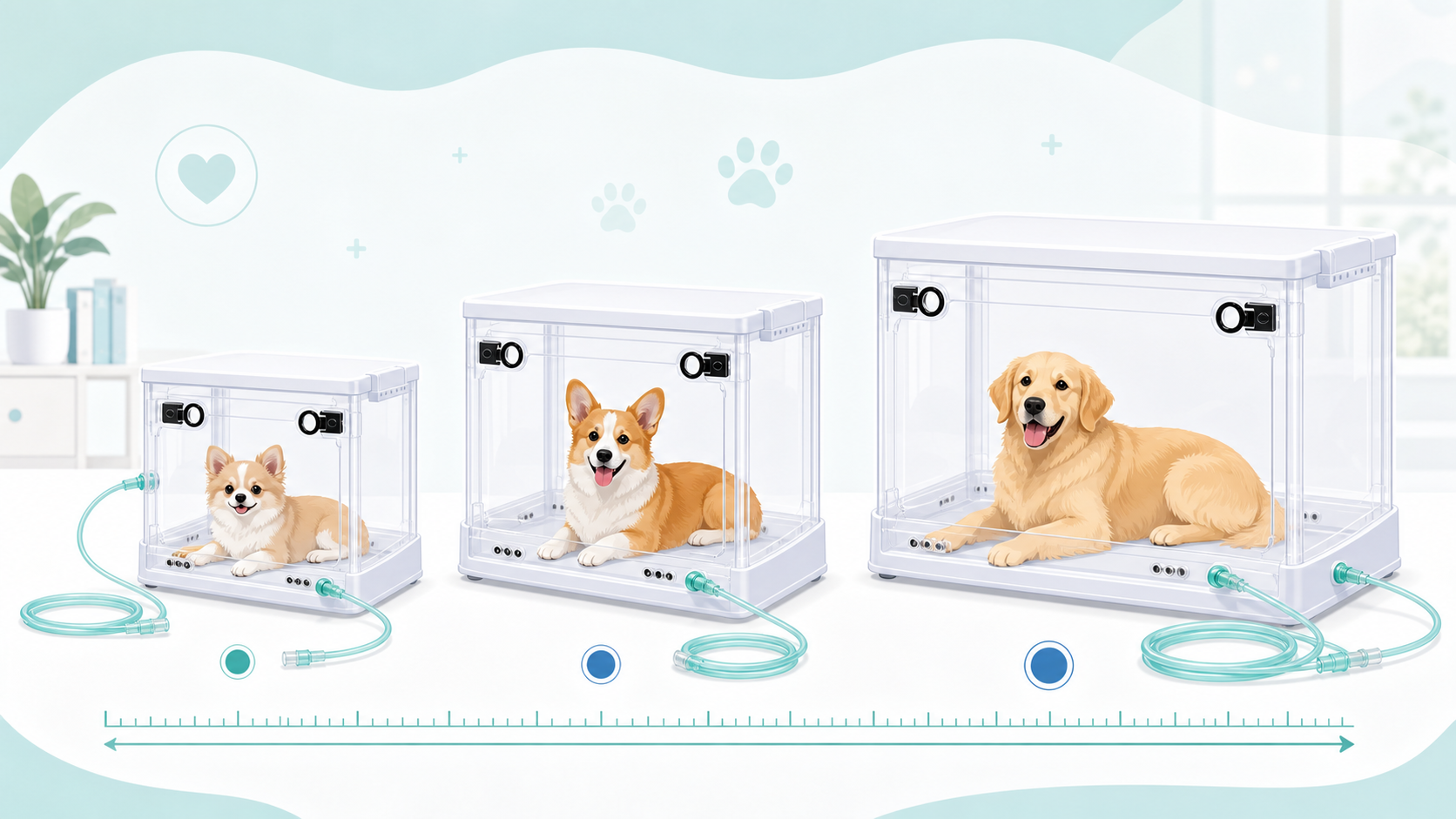 How to Choose the Right Pet Oxygen Chamber Size
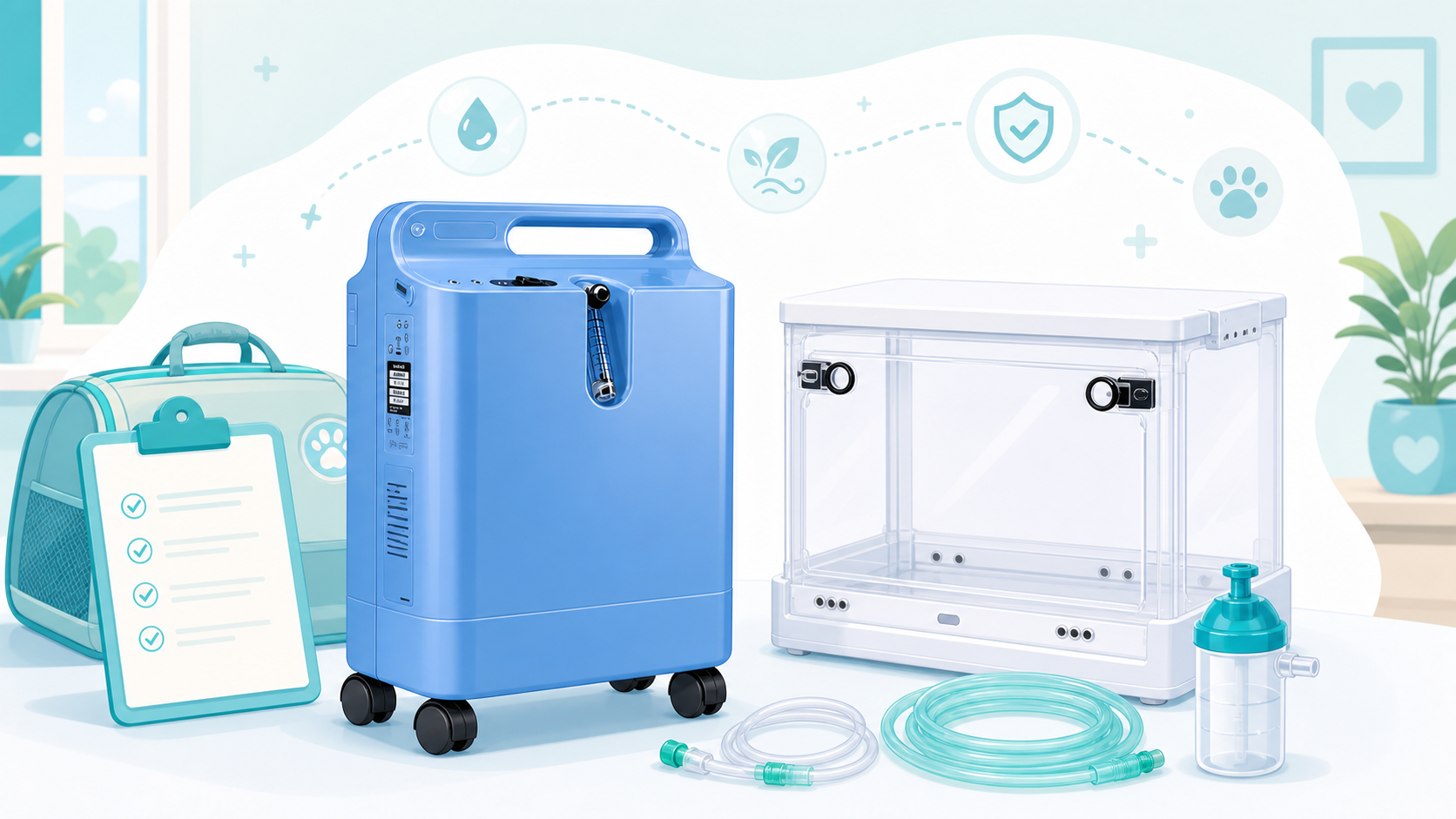 Preparing Oxygen Equipment Before Transfer or Discharge
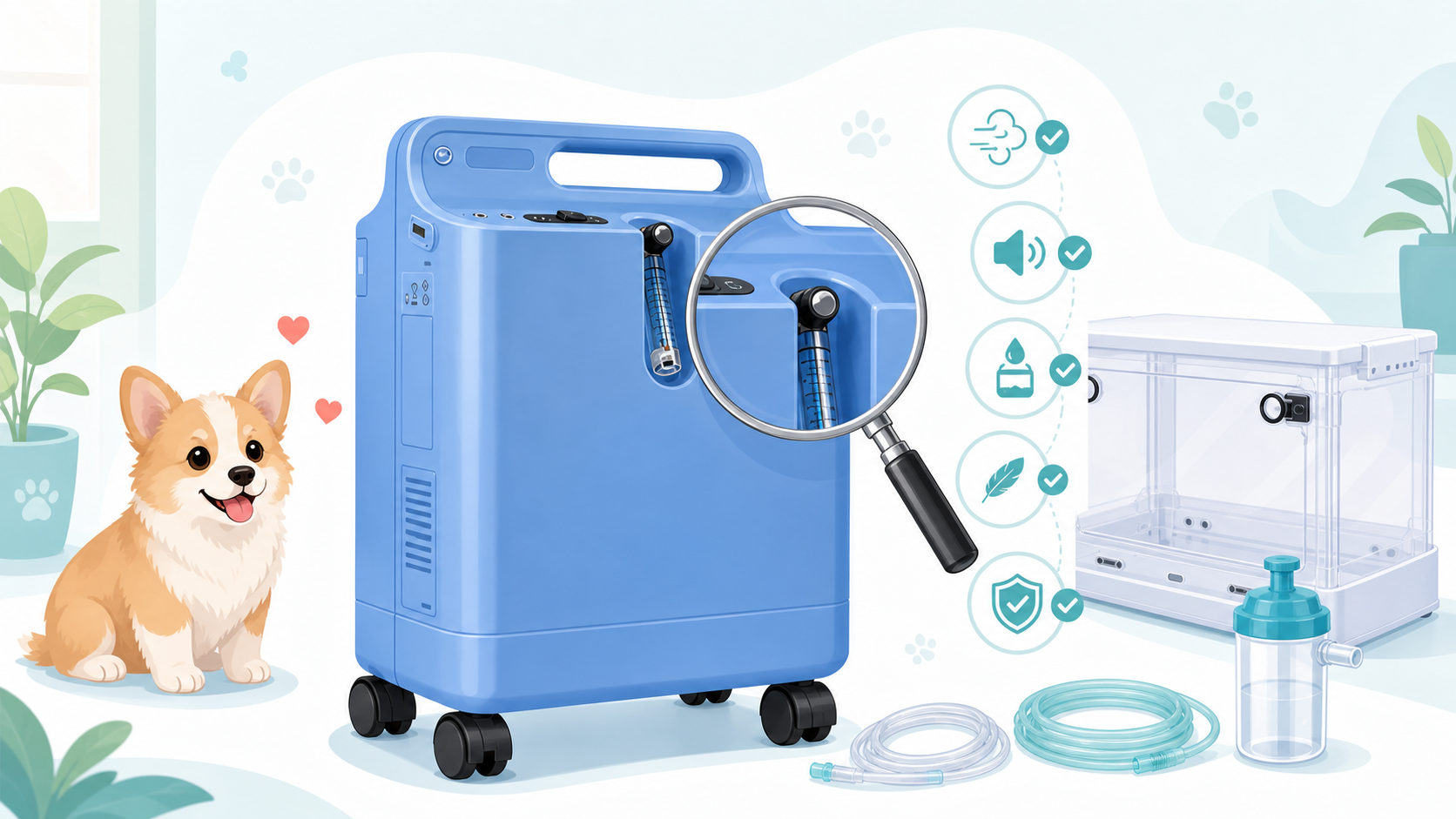 How to Choose a Pet Oxygen Machine: 5 Practical Checks
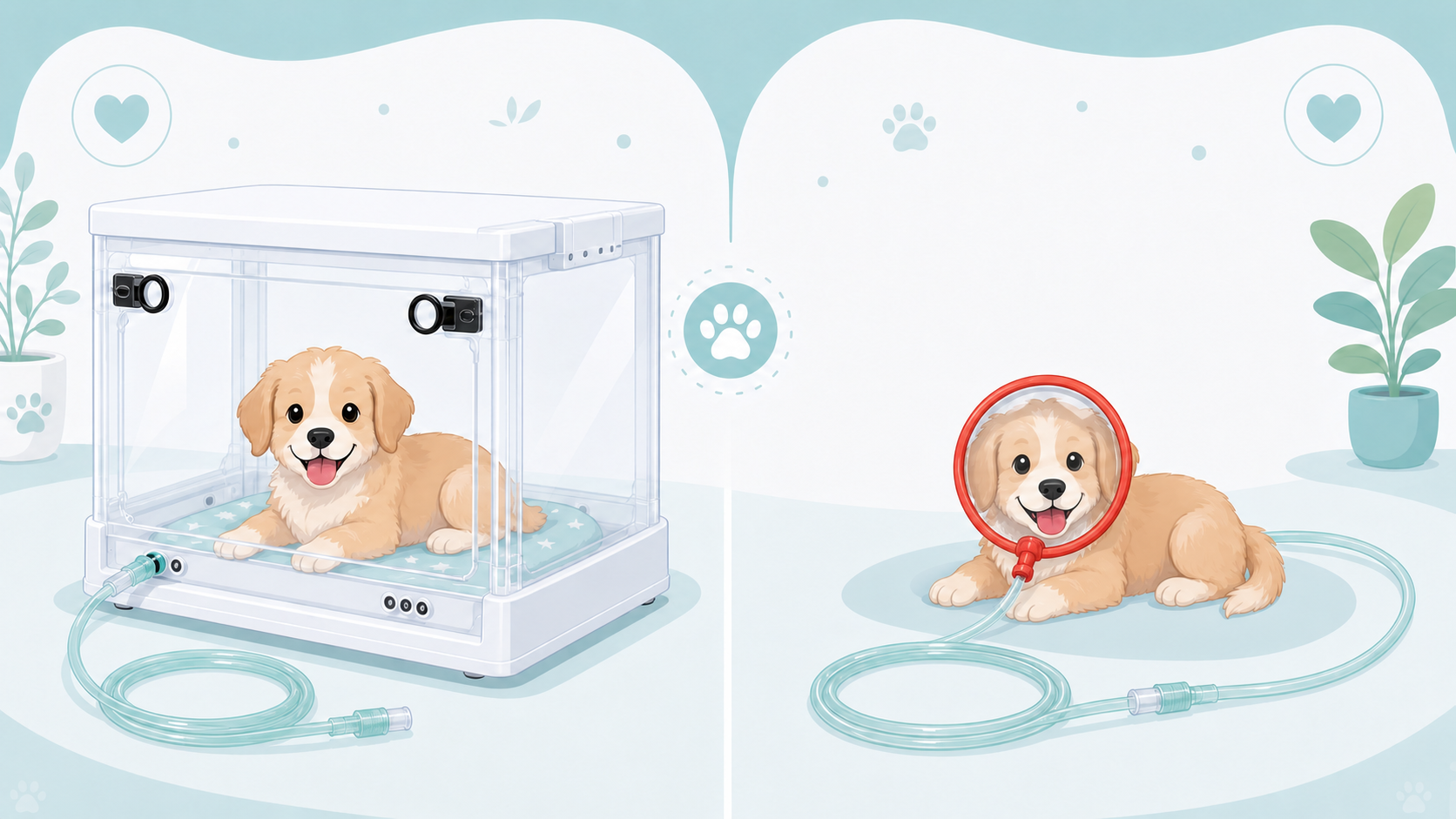 Oxygen Hood, Mask or Chamber: Which Is Better?
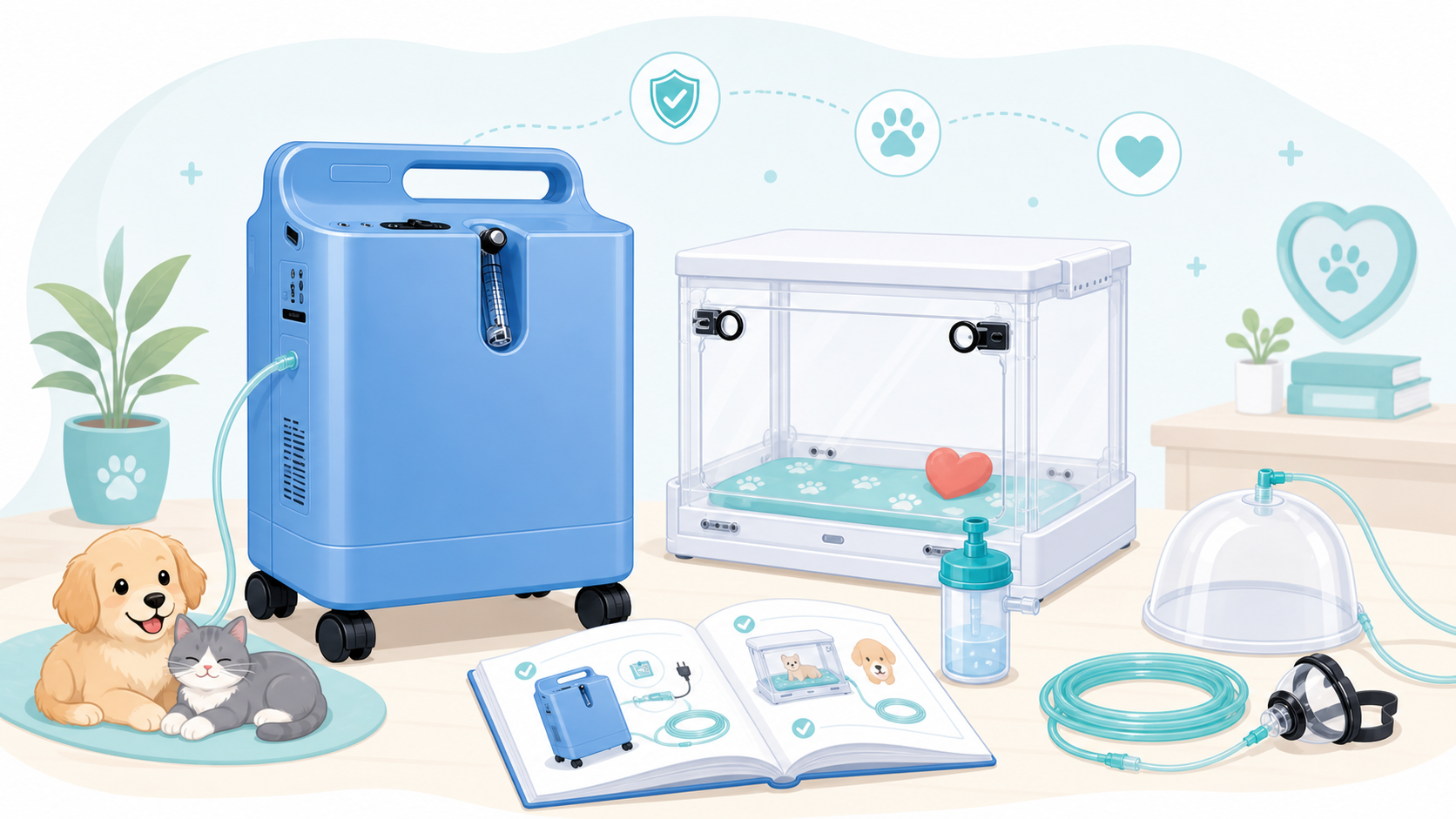 Pet Oxygen Machine User Guide: Setup, Safety and FAQ
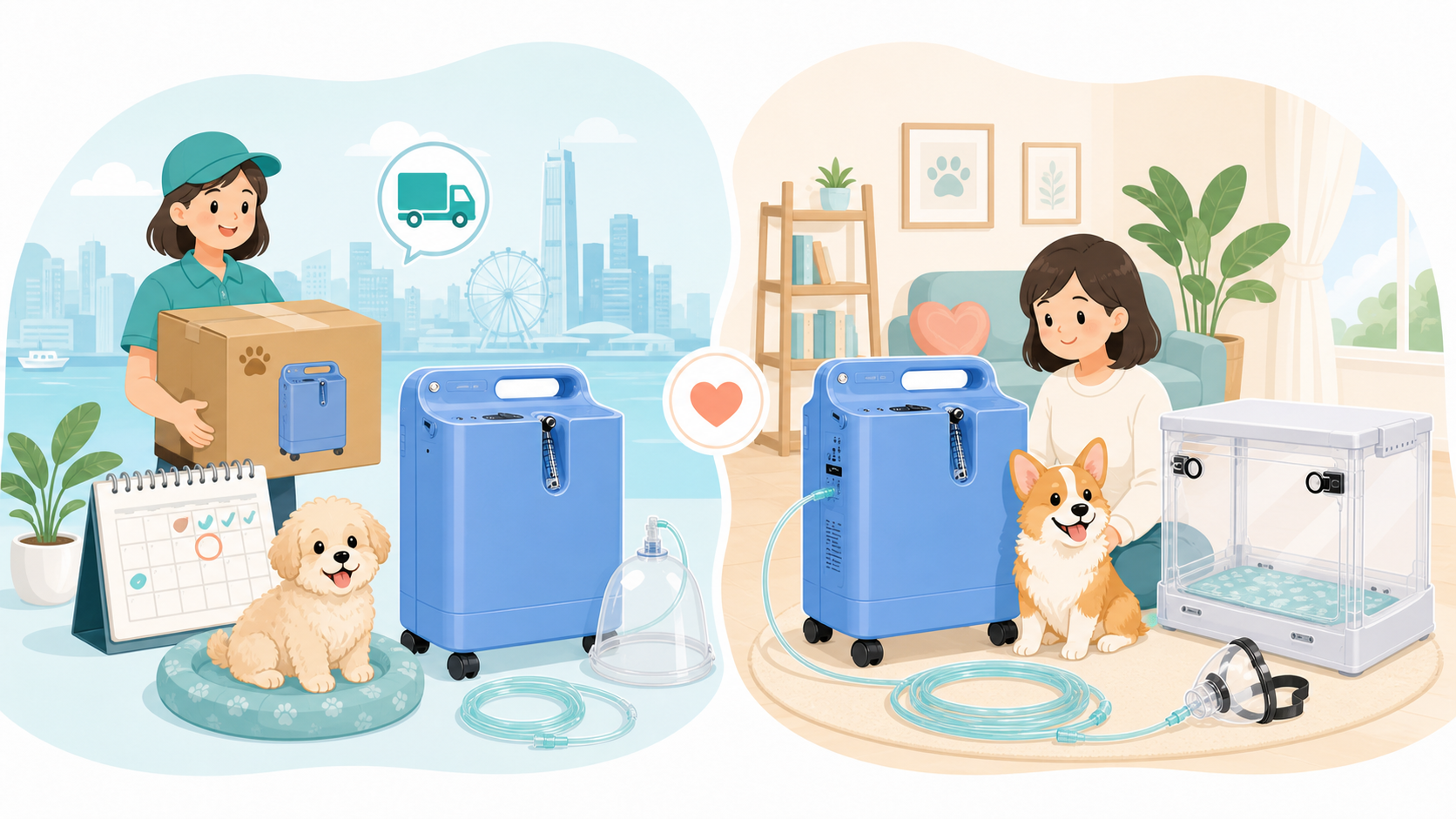 Rent or Buy a Pet Oxygen Machine in Hong Kong?
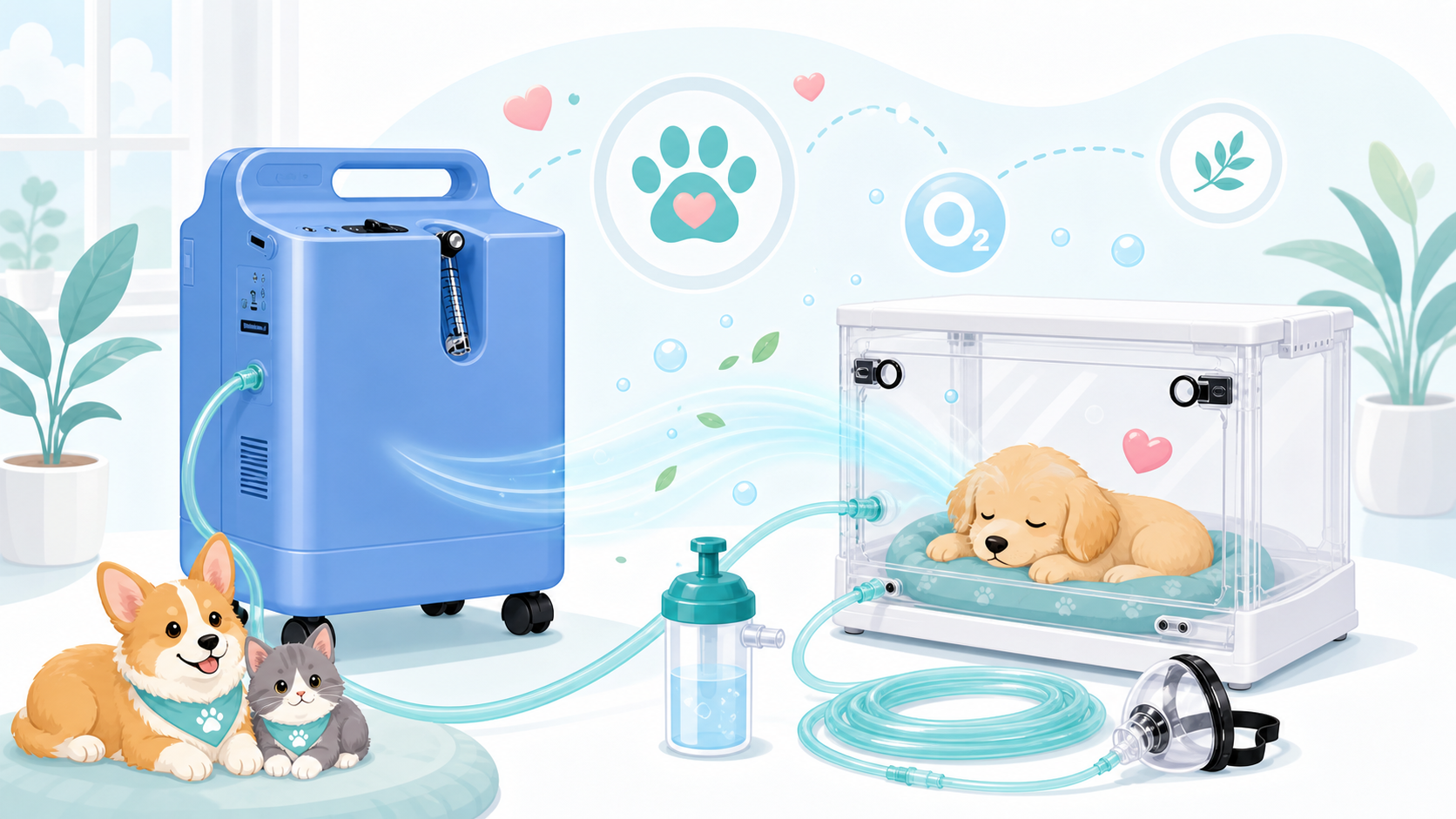 What Does a Pet Oxygen Machine Do?
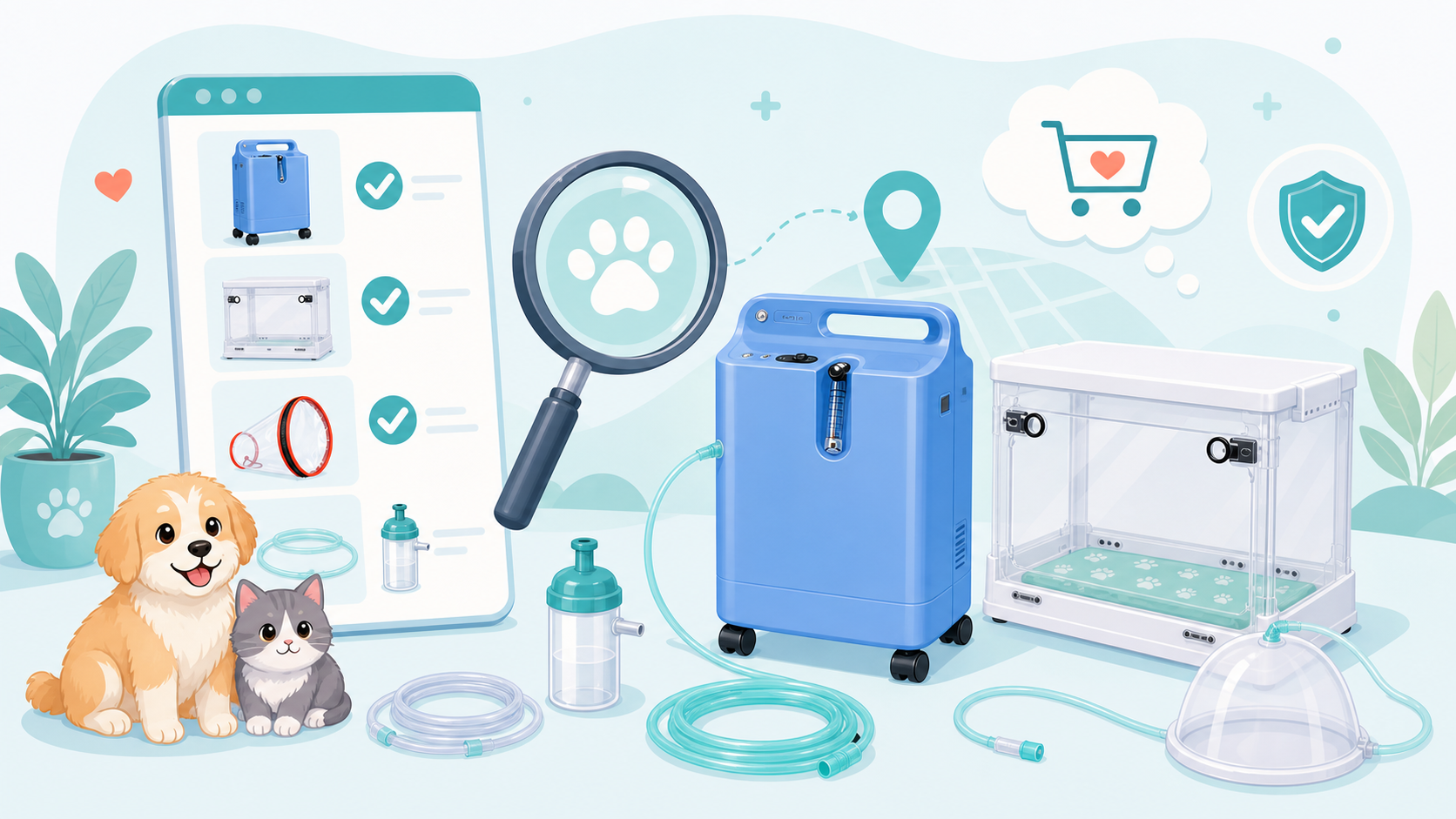 Looking for a Pet Oxygen Machine? Equipment Checklist
 Benefits of Pet Oxygen Machines and Safety Notes
