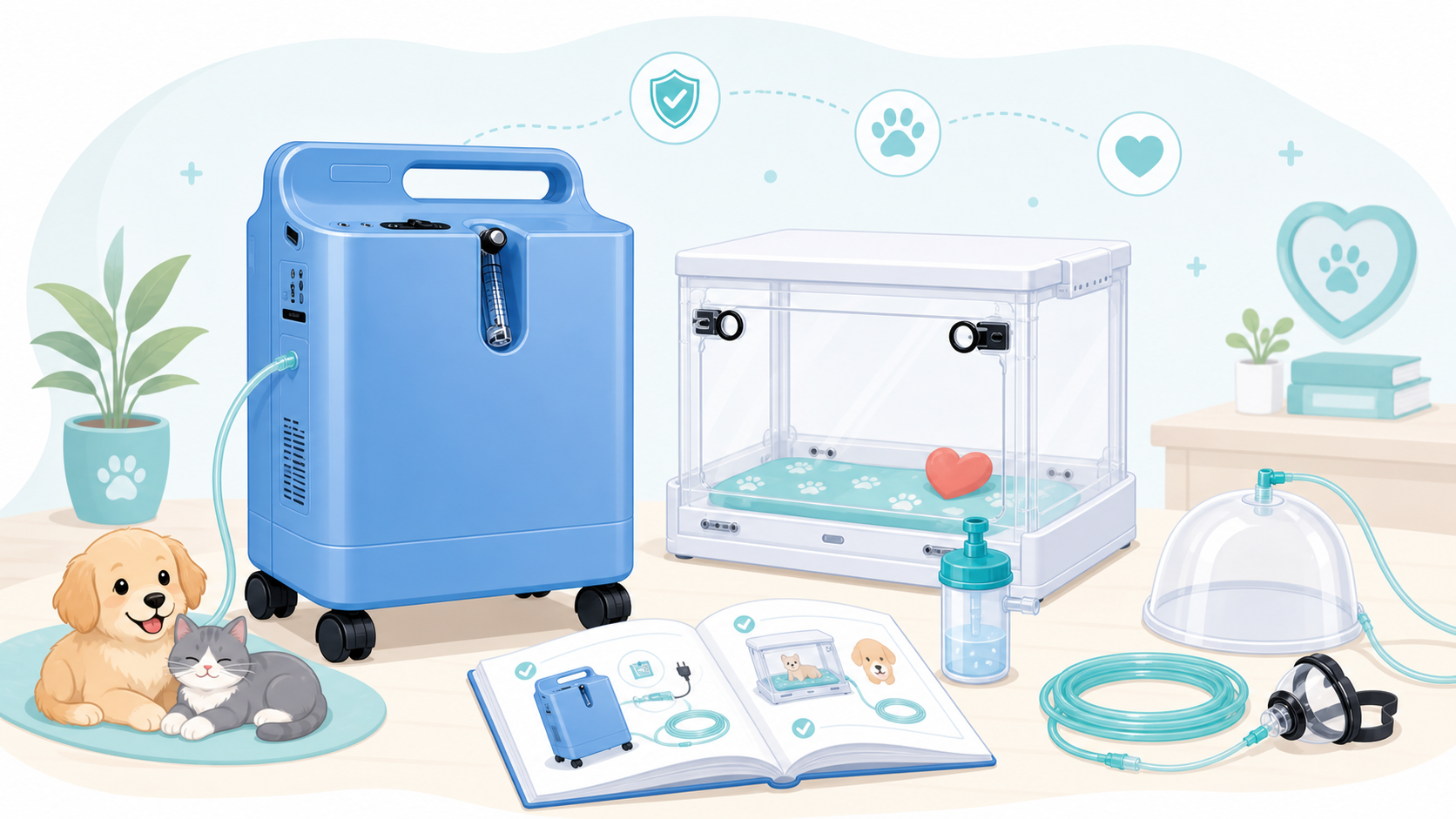
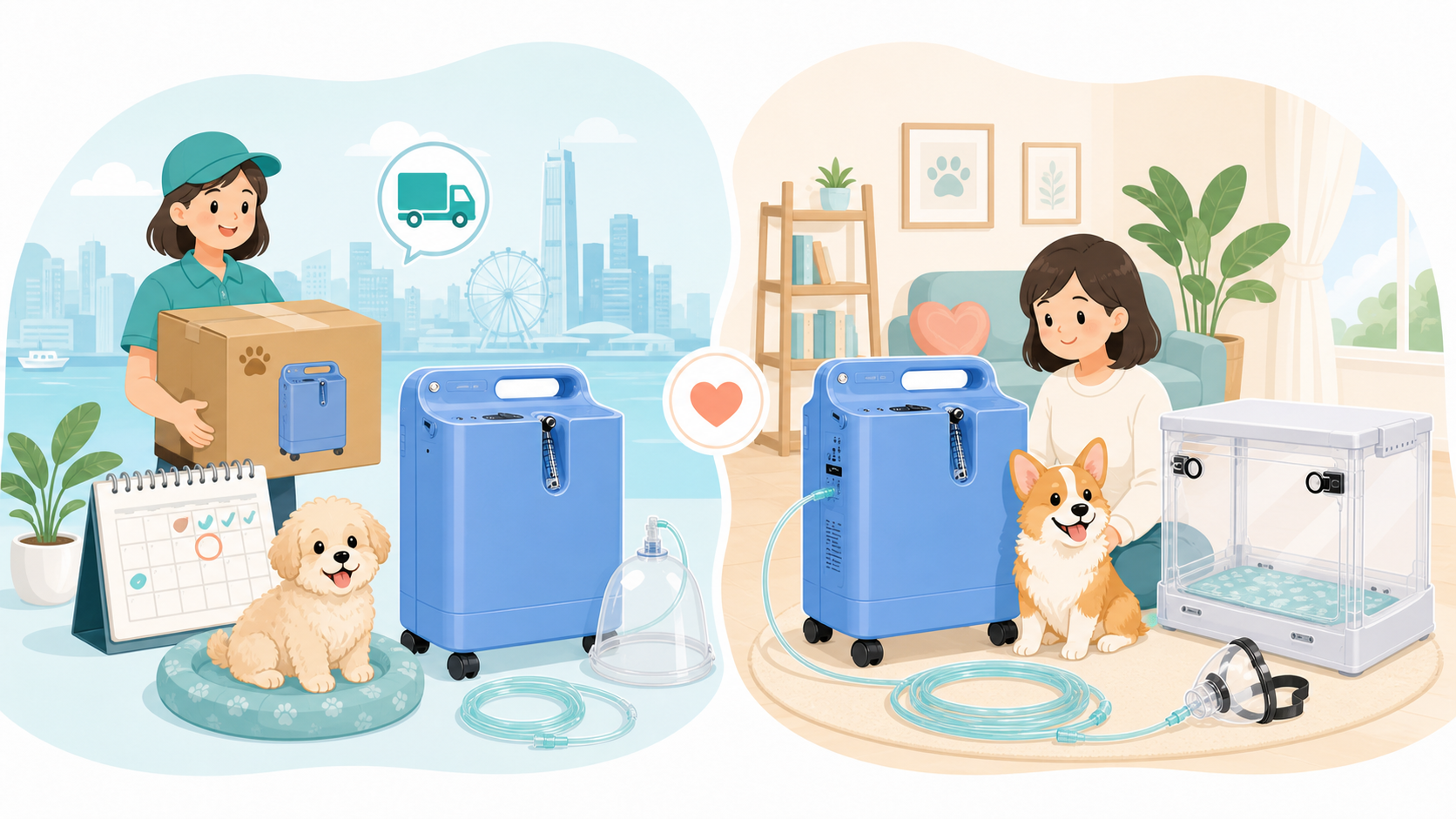
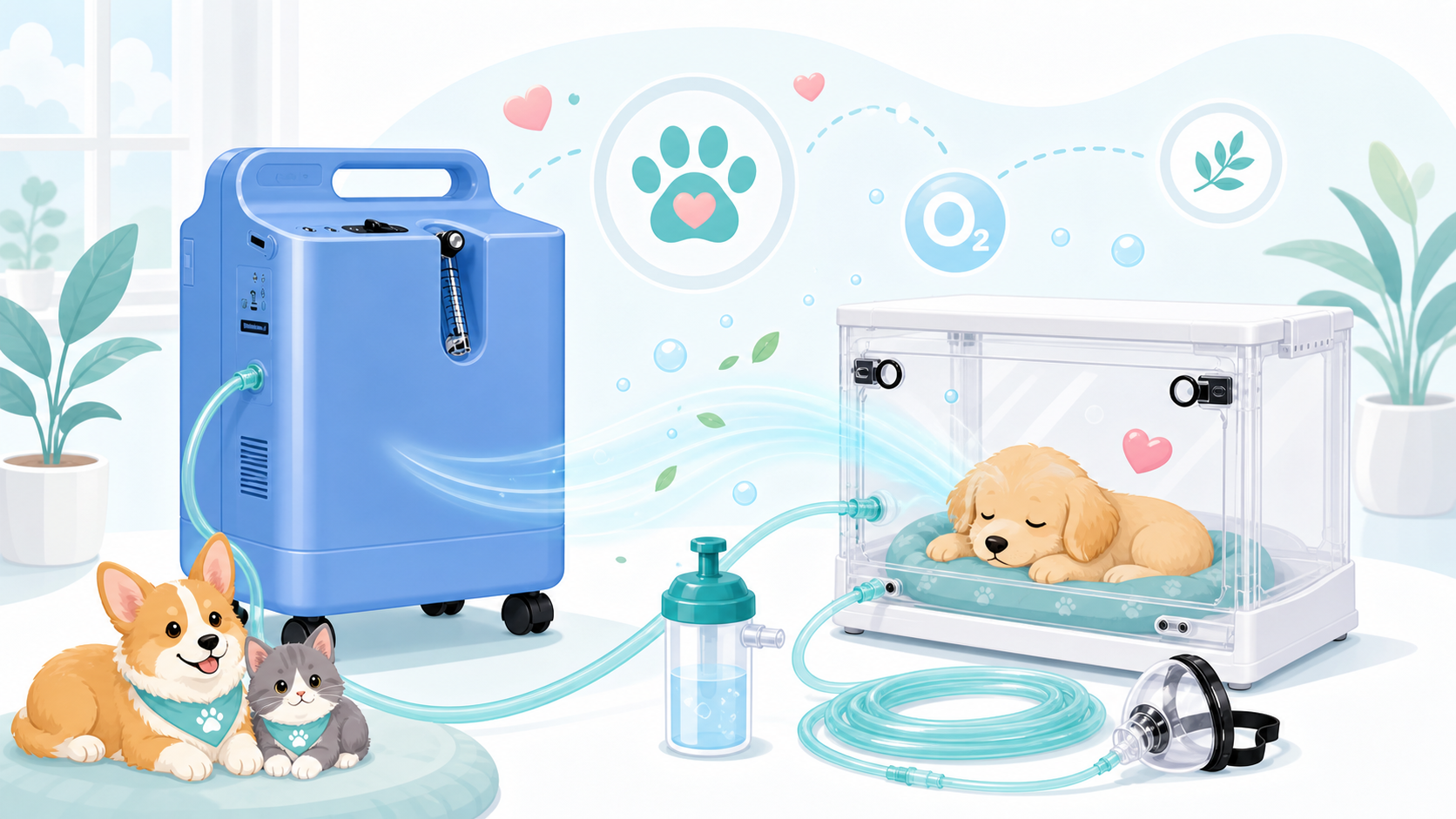
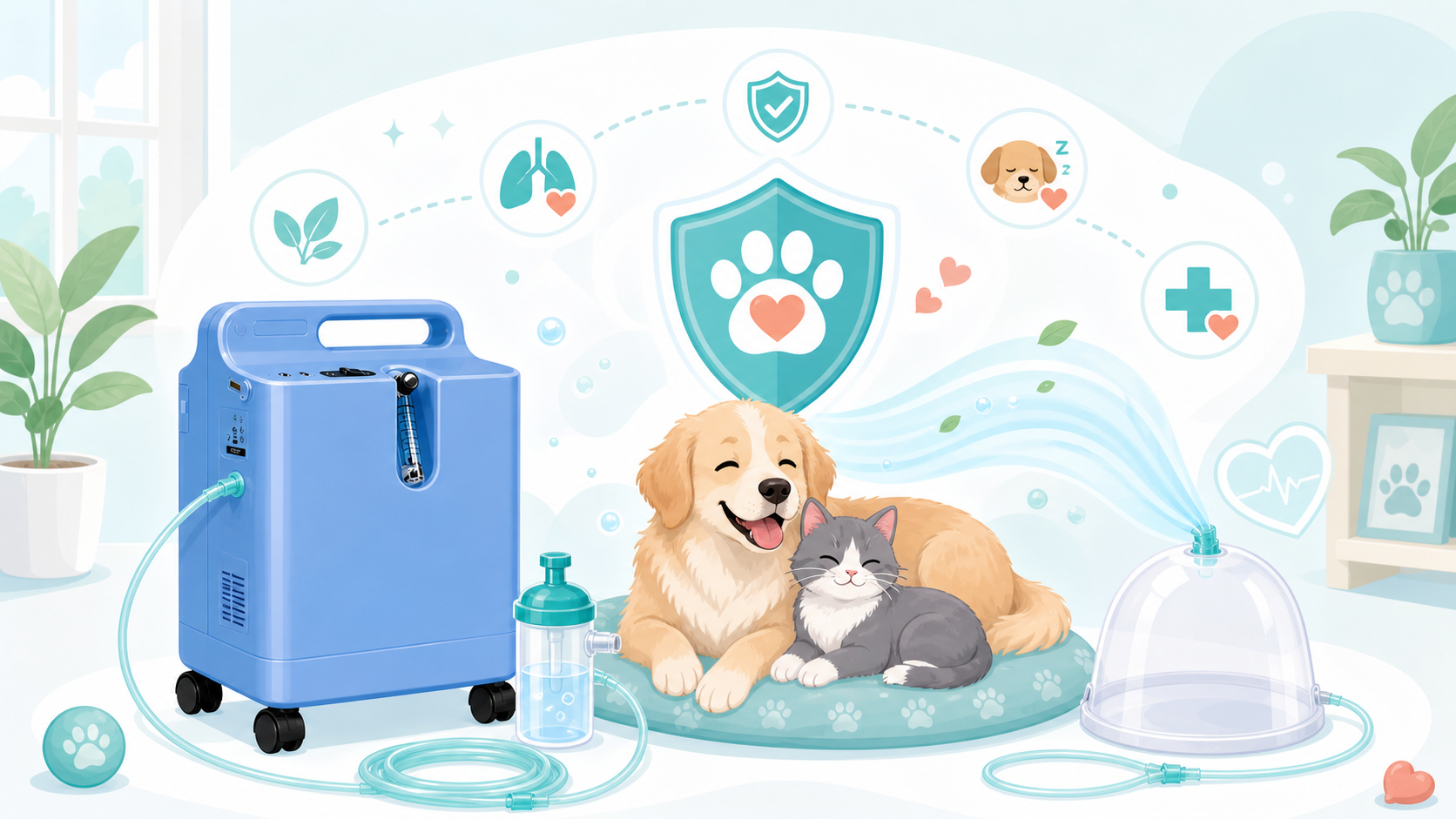
Quick Takeaways
- May support breathing and recovery
- Does not replace diagnosis or treatment
- Continuous observation matters
Possible benefits
Under veterinary advice, oxygen may support pets with breathing distress, post-op recovery, heart-lung disease or short acute episodes. Benefit depends on the cause and current condition.
- May reduce low-oxygen stress
- May help pets rest more comfortably
- Can support home care or bridge time before follow-up
Safety points
The chamber should not become too hot or stuffy. Keep fire, smoking and high-heat devices away from oxygen. Seek veterinary care if symptoms worsen.
- Keep the area ventilated
- Avoid flames and heat
- Do not leave your pet unattended for long periods
How to tell if it helps
Helpful oxygen support often means calmer breathing, more relaxed posture and less panic. If effort remains high or alertness drops, medical assessment is needed.
- Is breathing slower?
- Can your pet rest?
- Are alertness and gum colour improving?
This guide is for owner education on home pet oxygen care. If your pet has breathing distress, gum colour changes, weakness or sudden worsening, contact a vet or emergency clinic first.
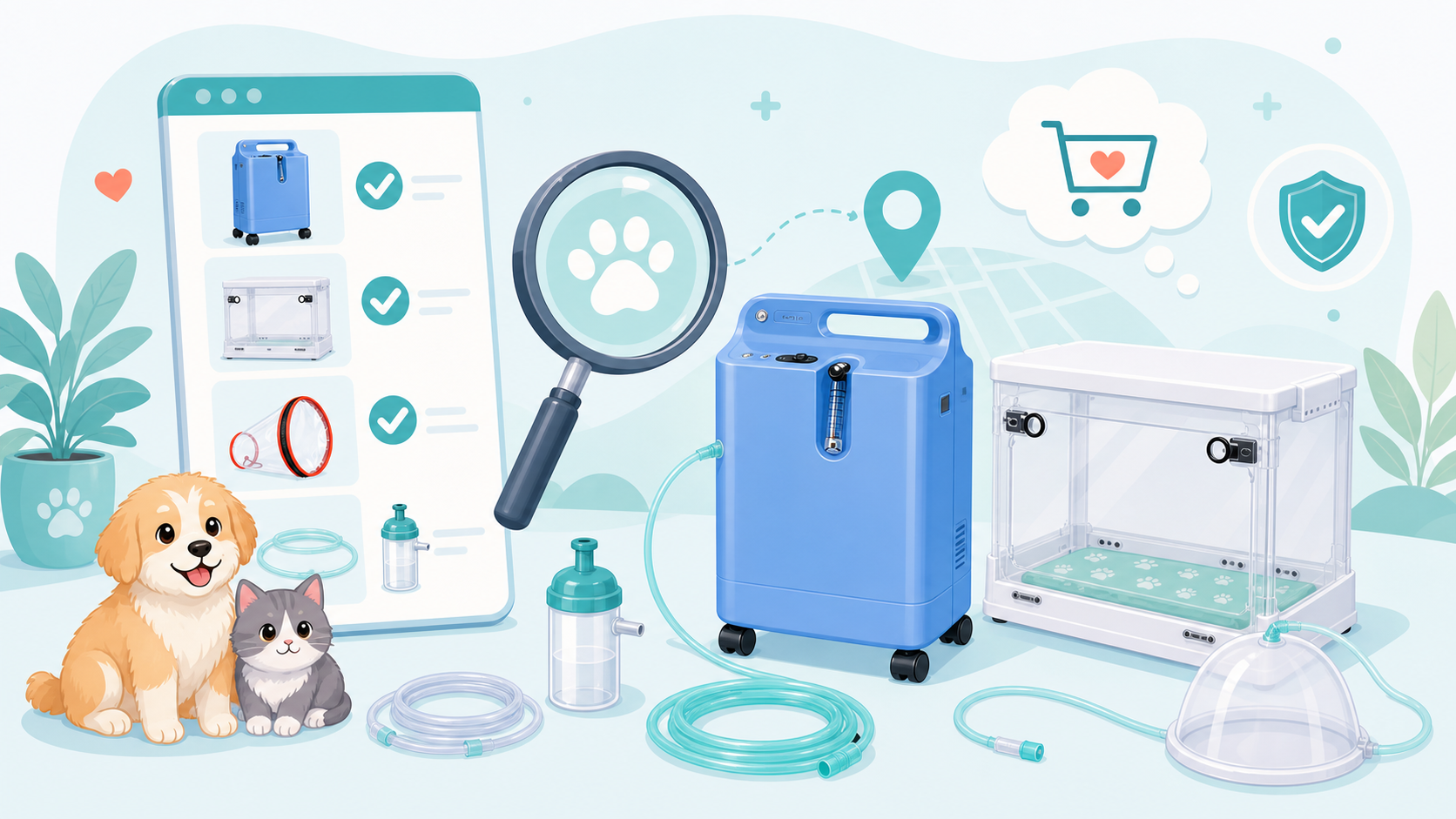
Need help choosing for your pet?
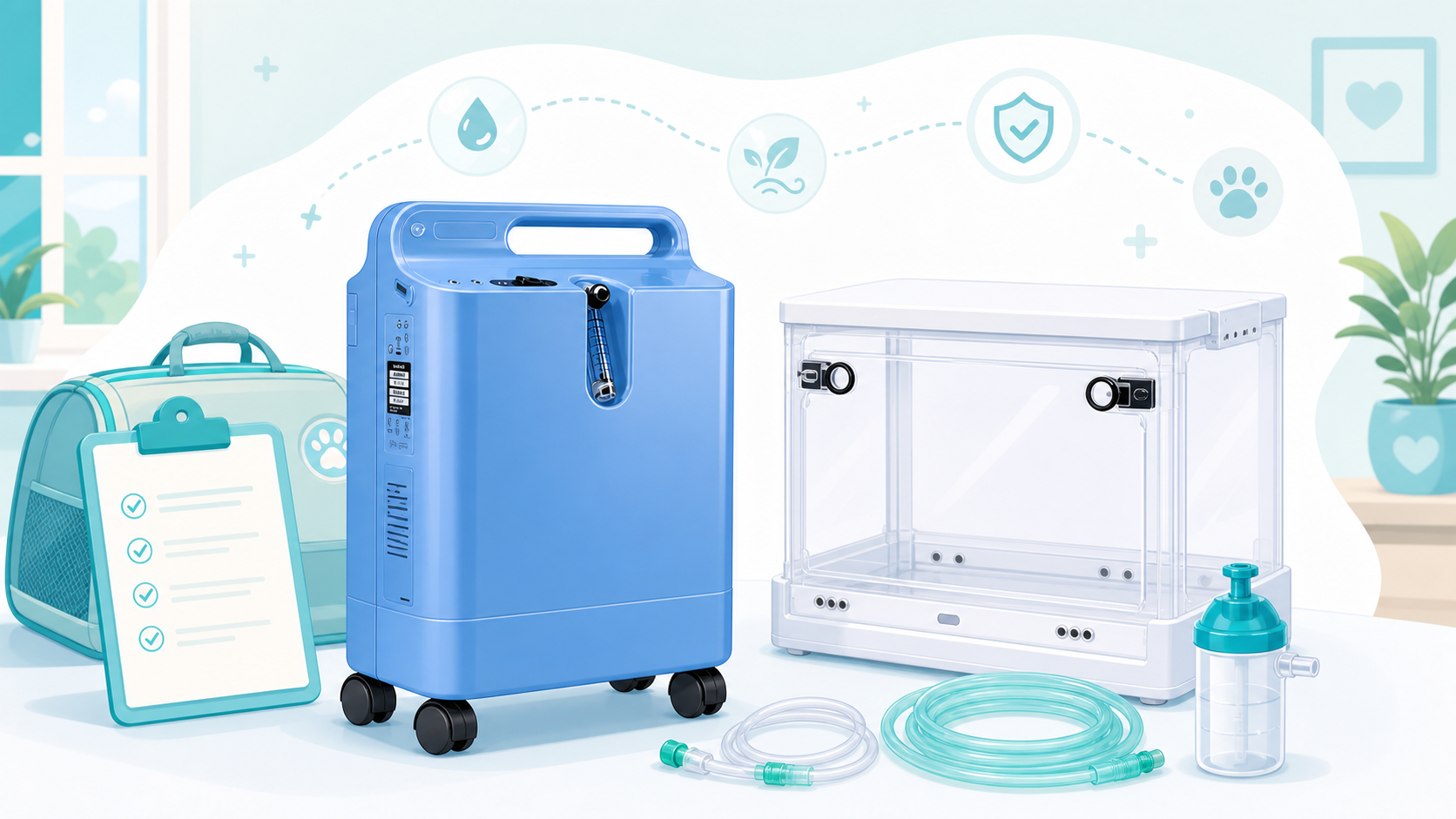
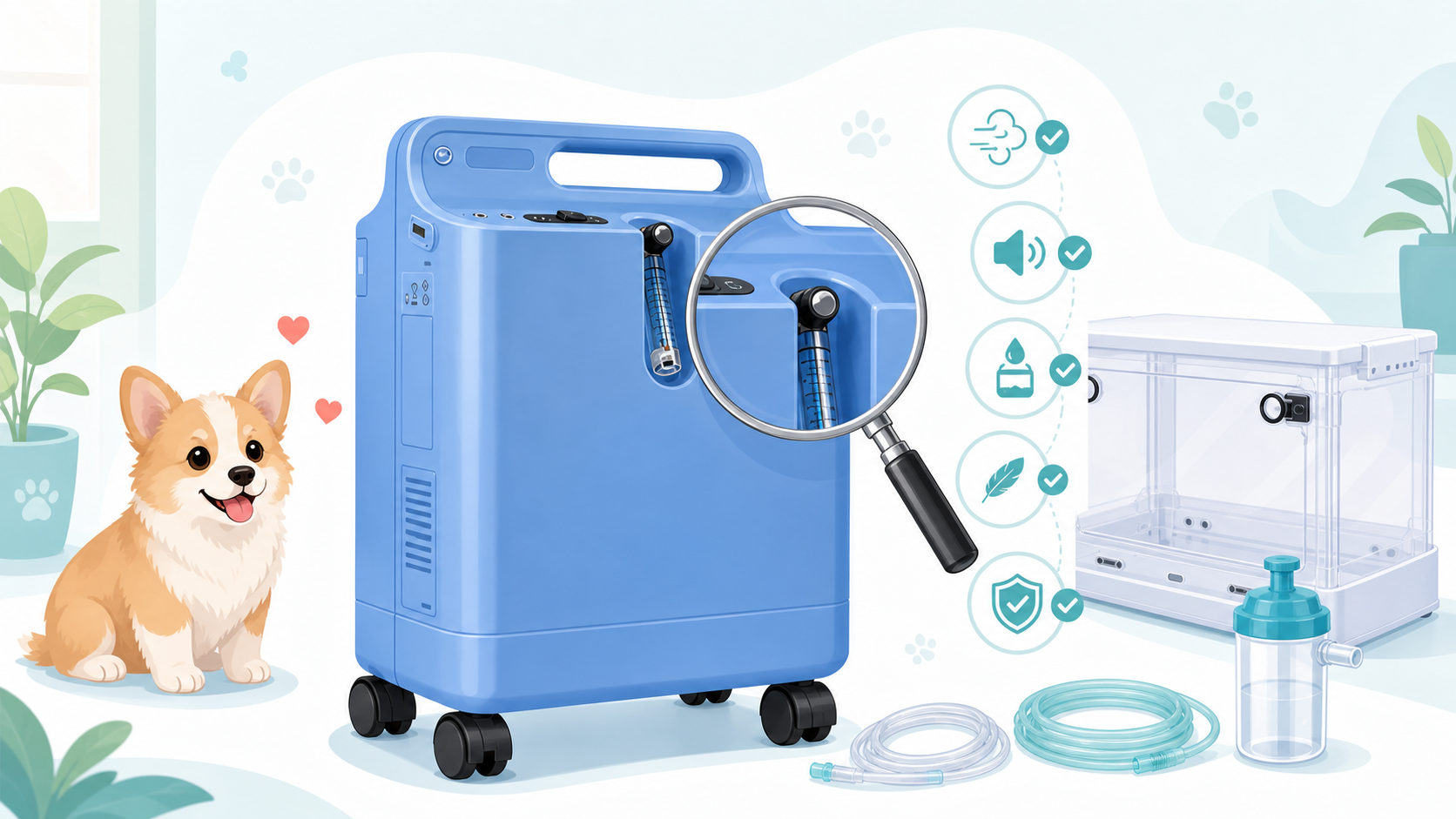
Send us your pet weight, photo, vet advice and required date. We can help pair EverFlo Q, Respicare or accessories.