Oxygen Machine for Ferrets
Ferrets are active with fast metabolism; oxygen support may help during breathing compromise under veterinary guidance.

Why Ferrets May Need Oxygen Support
Ferrets may need oxygen support during respiratory infection, cardiac-related breathing stress, trauma, heat stress, or recovery after anesthesia. Because they are active animals, a sudden drop in energy or a change in breathing pattern can be a meaningful warning sign.
A stable home setup can help during recovery by reducing unnecessary movement and keeping observation consistent. Owners should watch breathing rate, effort, gum color, appetite, hydration, and whether the ferret is able to rest comfortably.
Oxygen should be used as supportive care while a veterinarian decides what is causing the breathing issue. It can help reduce strain, but it does not replace diagnostics, medication, imaging, or emergency treatment when those are needed.
This content is educational and does not replace veterinary diagnosis. Follow your veterinarian for oxygen settings and duration.
Common Reasons Ferrets May Need Oxygen Support
Every pet is different, but oxygen support is usually considered when breathing effort rises, oxygenation drops, or recovery needs a calmer support window.
Respiratory disease or lung stress
Ferrets may struggle to oxygenate during infection, inflammation, trauma, or heart-lung stress. Oxygen support can help while veterinary treatment addresses the cause.
Post-operative or acute recovery period
After anesthesia, surgery, or sudden illness, pets may need a quieter and more stable recovery setting. Oxygen support can reduce breathing effort during this window.
Home monitoring and short-term stabilization
When your veterinarian agrees that home care is appropriate, a stable oxygen source helps owners monitor breathing, energy, and appetite more consistently.
Breathing Signs to Watch Closely
Any of these signs should be treated seriously. If symptoms appear suddenly, keep worsening, or your pet looks distressed, contact a veterinarian or emergency service first.
- Breathing faster or harder than usual
- Sudden drop in energy
- Refusing food or movement
- Unusual gum, tongue, or skin color
- Changes in breathing sounds, posture, or sleep
- Recovery worsening after illness or surgery
What a Home Oxygen Setup Should Solve
A good home setup is not simply about having oxygen. It should give your pet a quiet, ventilated, easy-to-monitor resting area while helping you track breathing rate, effort, sleep, energy, and appetite for your veterinarian.
An oxygen concentrator is usually more practical when support may be needed for hours or days because it provides continuous oxygen without repeatedly replacing cylinders. Very short transport needs may require a different arrangement.
How to Choose a Suitable Oxygen Machine
The right choice depends on pet size, expected duration, available space, noise tolerance, and whether you need a chamber, mask, tubing, or other accessories. For longer home rest periods, continuous-flow home concentrators are usually the steadier option; portable or transport needs should be assessed separately.
PetAir can help compare available models, rental versus purchase cost, and accessory fit for your situation. Treatment settings should still follow your veterinarian.
Recommended In-Stock Oxygen Machines
These models are available for rental or purchase based on your care needs.
Ferrets Oxygen Support FAQ
Yes, as supervised supportive care with veterinary-defined settings.
Yes. Oxygen support is supportive equipment, not a diagnosis. Flow rate, duration, and whether emergency care is needed should be guided by a veterinarian.
A concentrator produces oxygen continuously from room air, making it more practical for longer home support. A cylinder has a limited supply and is often better suited to short use or transport.
Monitor resting breathing rate, effort, energy, sleep, and appetite. If breathing does not improve or worsens, contact your veterinarian immediately.
Do not adjust settings beyond veterinary guidance. More flow is not automatically better and can make monitoring less reliable.
For recurring or chronic respiratory issues, discuss long-term planning with your vet. Short-term recovery cases often begin with rental.
Pet Oxygen Guides
Practical articles for Hong Kong pet owners, from chamber sizing to transfer prep and machine choice.
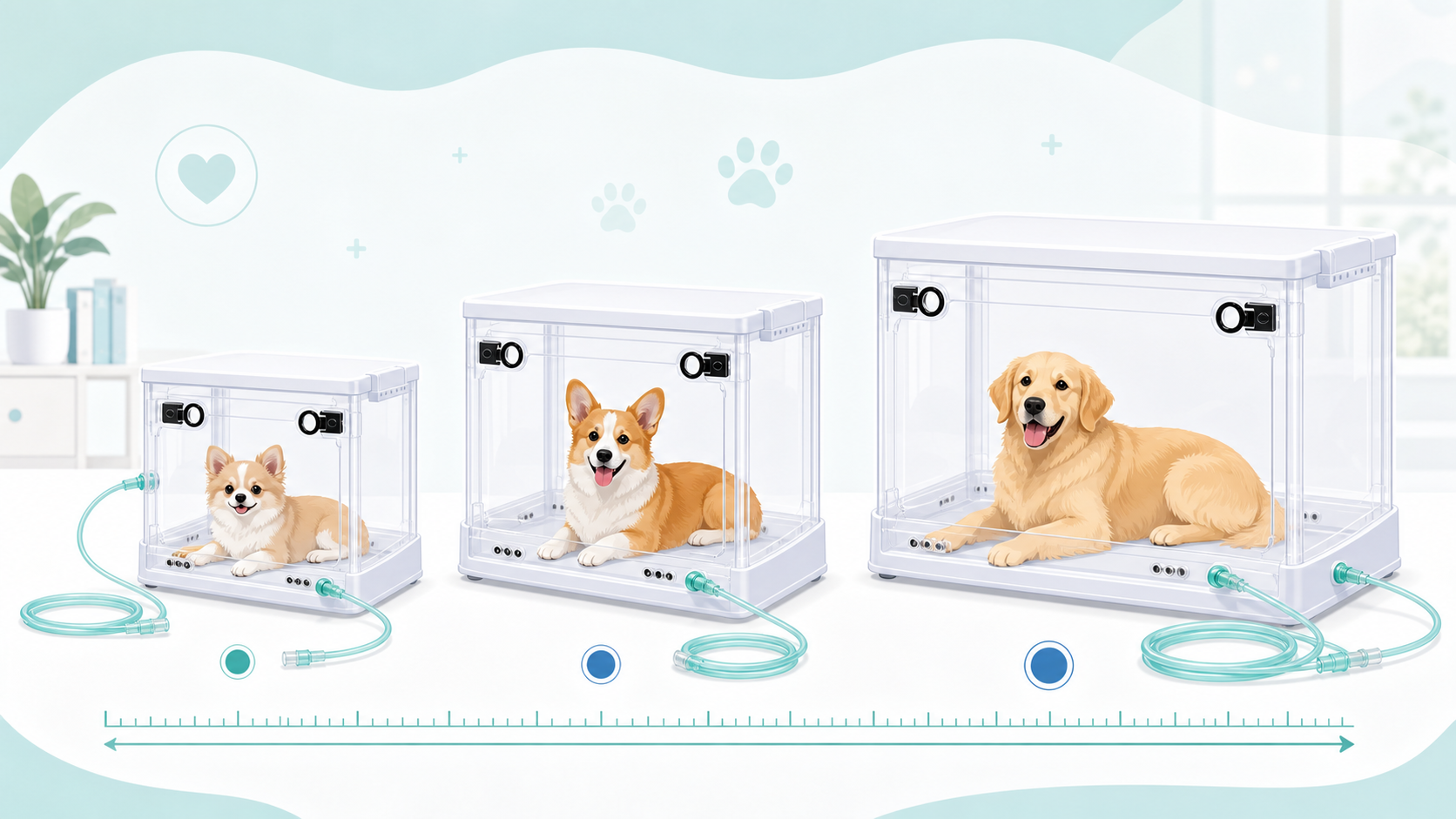 How to Choose the Right Pet Oxygen Chamber Size
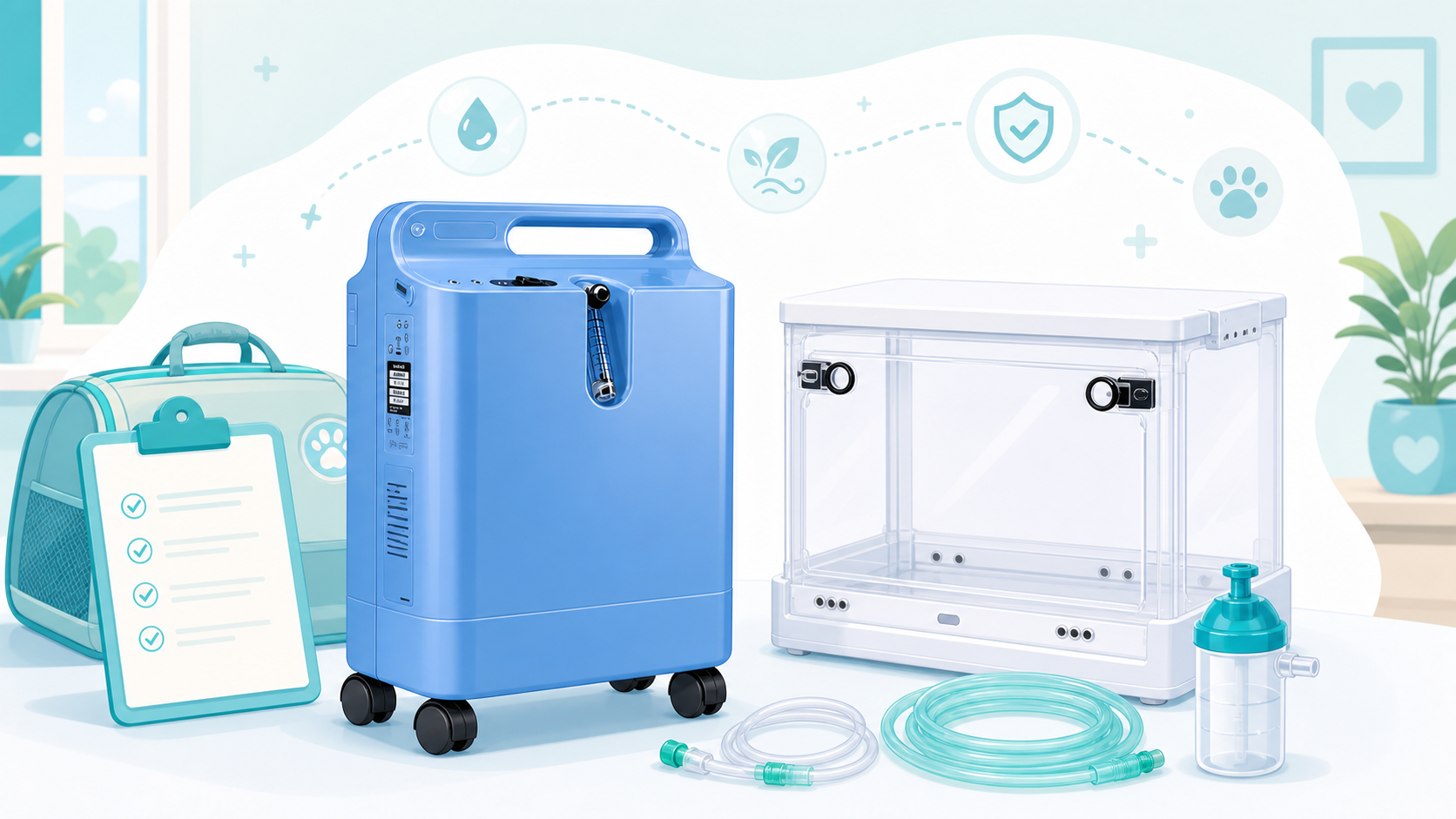 Preparing Oxygen Equipment Before Transfer or Discharge
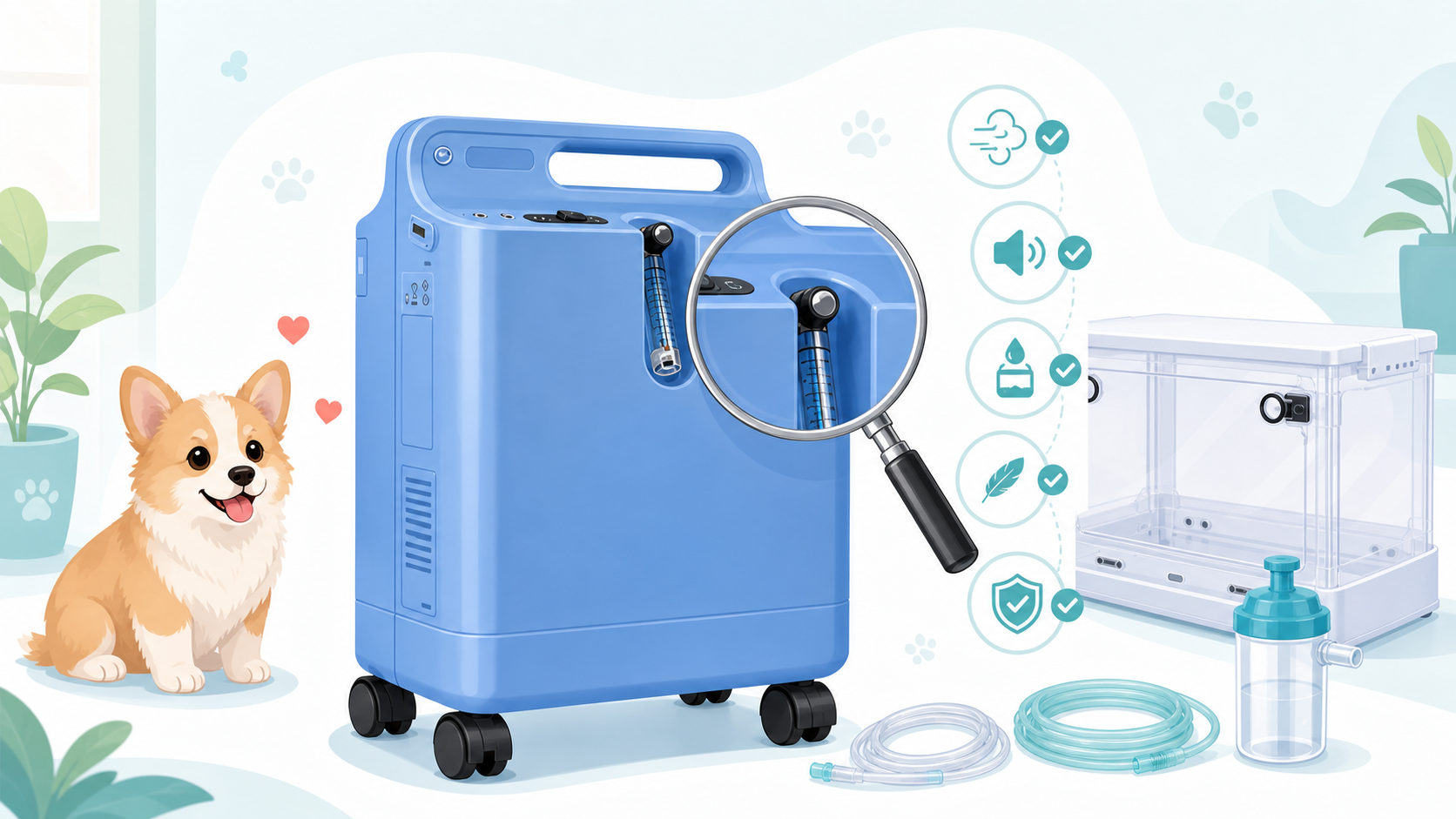 How to Choose a Pet Oxygen Machine: 5 Practical Checks
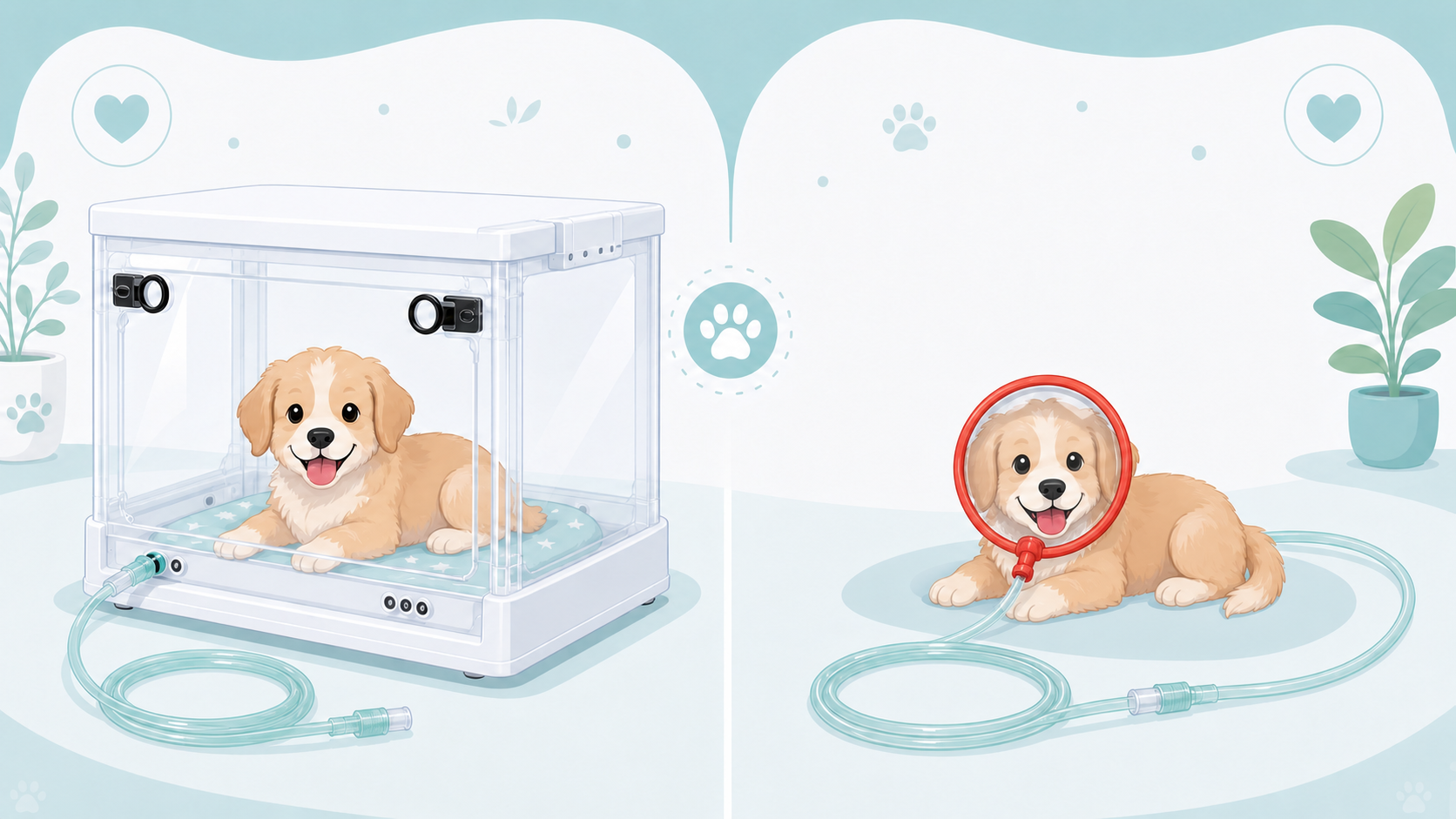 Oxygen Hood, Mask or Chamber: Which Is Better?
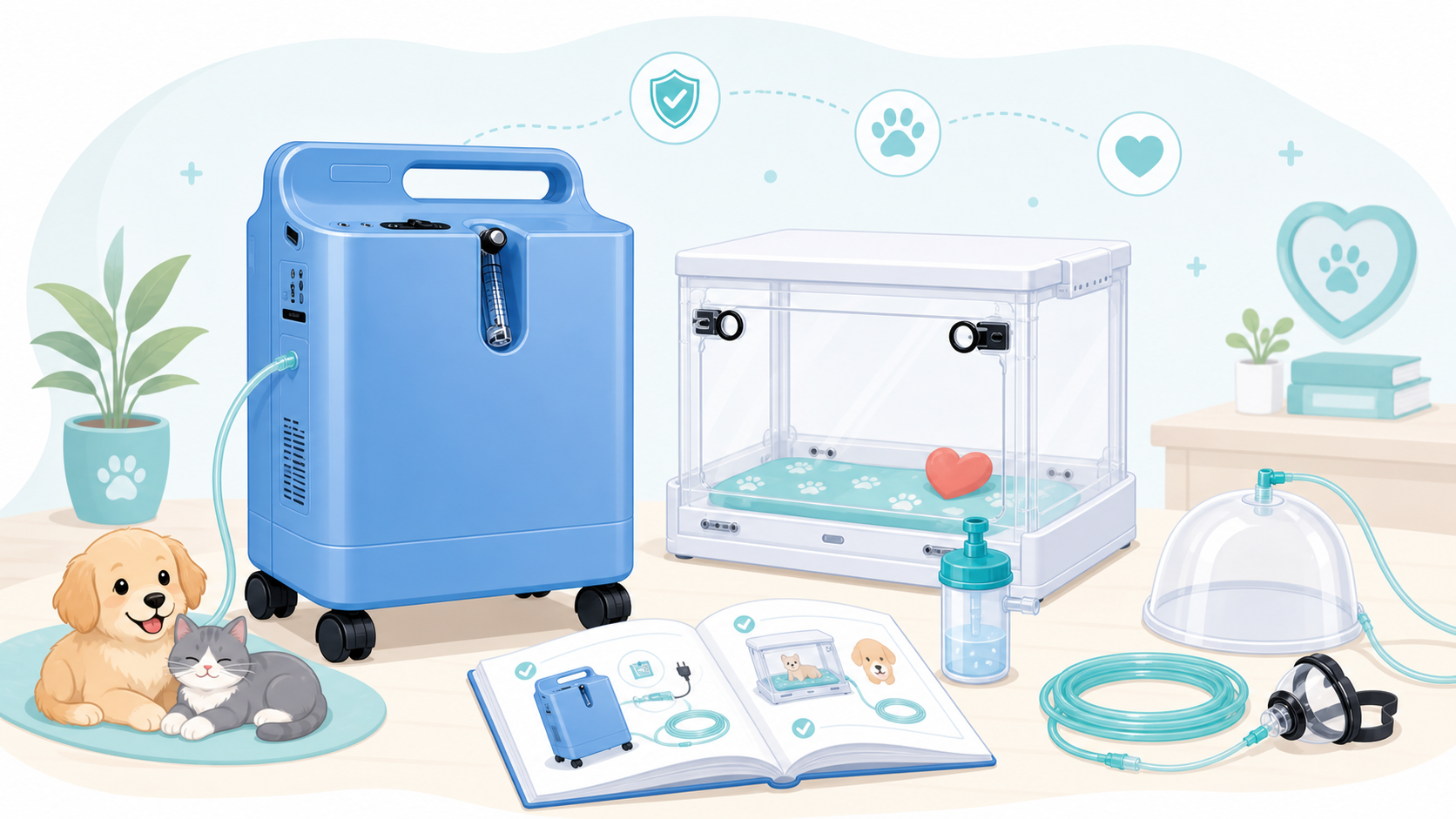 Pet Oxygen Machine User Guide: Setup, Safety and FAQ
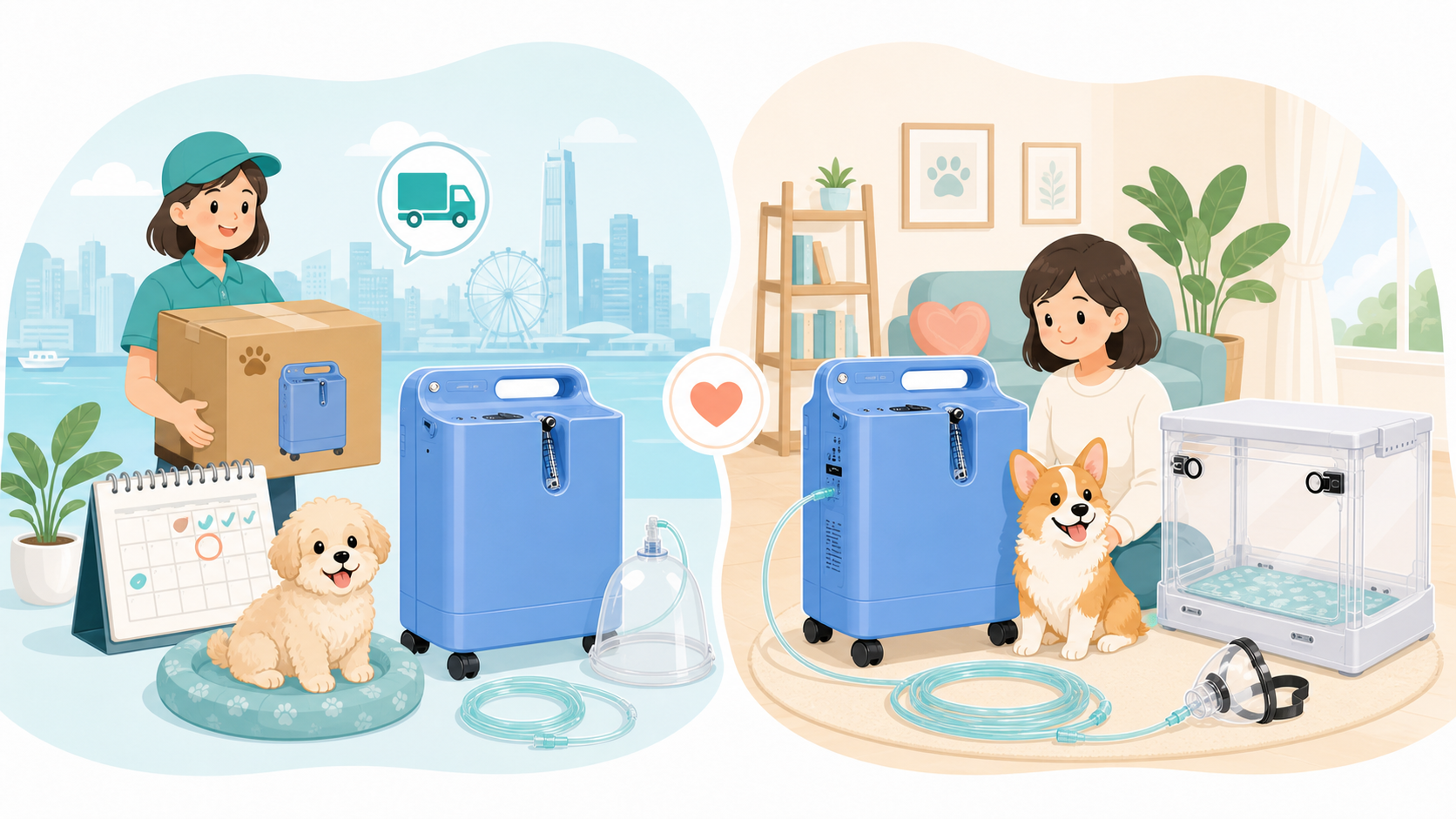 Rent or Buy a Pet Oxygen Machine in Hong Kong?
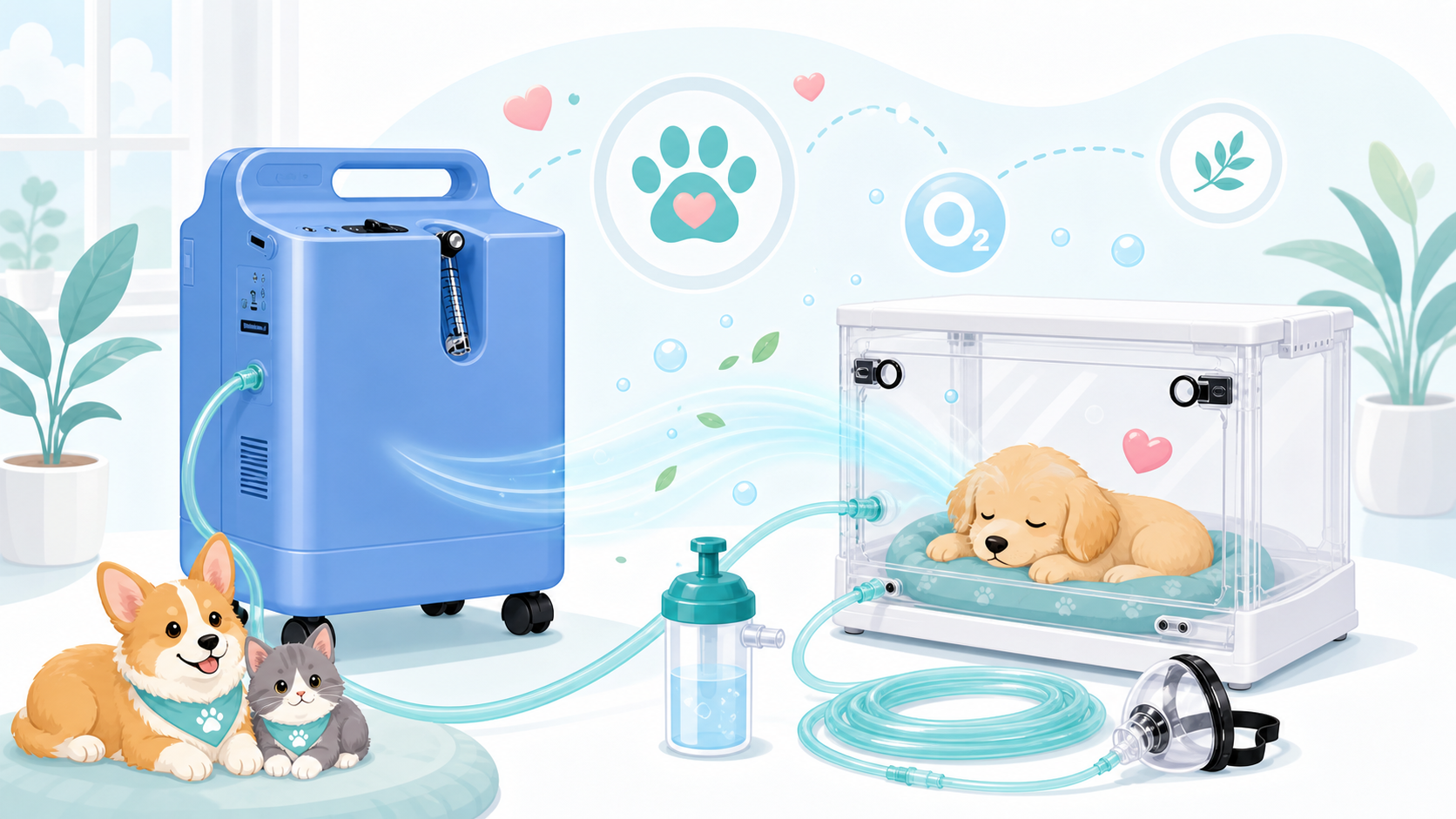 What Does a Pet Oxygen Machine Do?
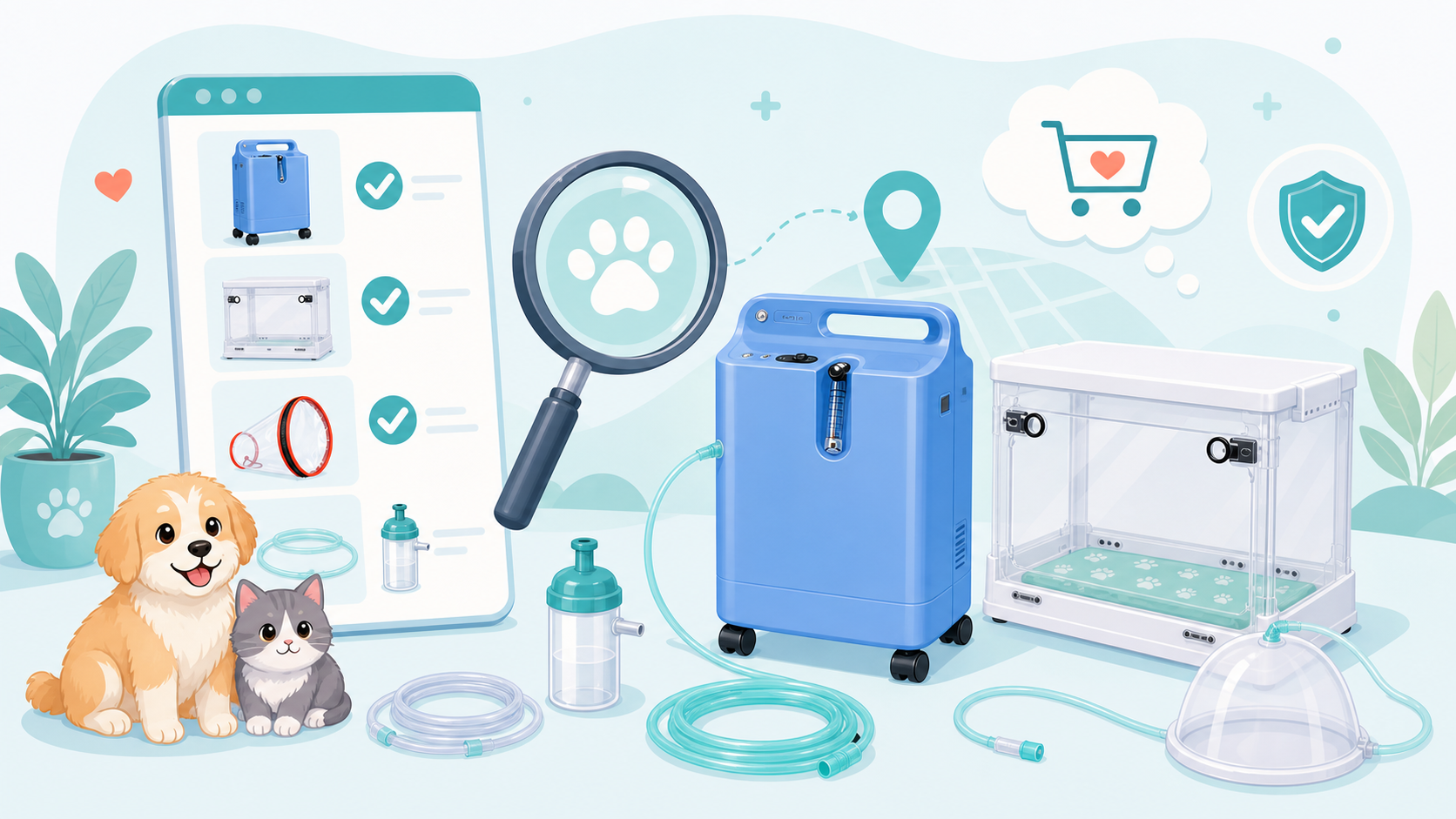 Looking for a Pet Oxygen Machine? Equipment Checklist
 Benefits of Pet Oxygen Machines and Safety Notes
